Medical facilities need more than a way to make waste disappear. They need a treatment process that controls infection risk, protects workers, reduces storage pressure and creates records that can be reviewed later.
That is where FHT medical waste sterilization fits into the modern healthcare waste workflow.
FHT, or Frictional Heat Treatment, uses high-speed mechanical shredding and friction to generate heat inside a closed treatment chamber. The waste is shredded, mixed, heated, sterilized, cooled and discharged within one controlled cycle. According to the public information from Weidun Environmental, the process can reach approximately 150 °C, provide a published 6 Log10 sterilization target under STAAT Level IV criteria, reduce volume by up to 80% and reduce weight by up to 30%, depending on the waste composition and operating conditions.
The important point is not only the final temperature. The performance of a treatment system depends on the complete chain:
Correct waste segregation + controlled loading + effective shredding + uniform heating + validated sterilization + safe cooling + traceable disposal.
This article explains the process in nine practical steps, shows where each control point matters and helps hospitals, laboratories, clinics, treatment centers and public-sector buyers evaluate whether an FHT solution is suitable for their facility.

The Short Answer
An FHT system first receives segregated infectious healthcare waste. A heavy-duty rotor then breaks the material into smaller, unrecognizable particles and mixes it continuously. The mechanical energy created by shredding is converted into frictional heat. As the temperature rises, moisture inside the waste contributes to a moist-heat environment. The system maintains the sterilization phase, cools the treated material with controlled water injection and automatically discharges a dry, unrecognizable residue.
The residue may be suitable for non-hazardous disposal or secondary use only after the applicable local regulations, testing requirements and receiving-facility conditions have been confirmed.
FHT Medical Waste Sterilization at a Glance
| Process element | What happens inside the system | Why it matters |
|---|---|---|
| Waste preparation | Infectious waste is segregated and transferred to the treatment area | Prevents incompatible materials from entering the chamber |
| Loading | Waste is loaded manually or through an automatic loading system | Controls operator exposure and improves workflow consistency |
| Pre-shredding | A high-torque rotor begins cutting and tearing the material | Increases surface area and removes the original identity of the waste |
| Mixing | Waste moves continuously through the treatment chamber | Reduces cold spots and improves heat distribution |
| Frictional heating | Mechanical energy is converted into heat | Avoids the need for an external steam boiler or combustion process |
| Sterilization | The published FHT cycle reaches approximately 150 °C | Supports pathogen inactivation when the cycle is properly validated |
| Cooling | Water is injected to bring the material to a safer handling temperature | Protects operators and simplifies discharge |
| Final output | Dry, grey, unrecognizable residue is discharged | Reduces storage, transport and disposal pressure |
| Traceability | Batch information and process data can be recorded | Supports audits, quality control and operational review |
What Is Frictional Heat Treatment for Medical Waste?
Frictional heat treatment medical waste is a non-combustion process that combines mechanical size reduction and thermal treatment in one closed vessel.
Traditional medical waste processes often separate several operations. Waste may be stored in bags, moved to a transport vehicle, delivered to a central facility, sterilized in one machine and shredded in another. Every additional transfer creates a handling point, a potential delay and another opportunity for leakage or exposure.
An FHT medical waste treatment system is designed around a different sequence. The waste enters the machine near the point where it is generated. It is then shredded and heated in the same treatment chamber. The system does not depend on burning the material, and the public FHT description states that the process does not require chemical additives, an external heat source or a pressure vessel.
This does not mean that every healthcare waste stream can be placed into the equipment. FHT is intended for specific treatable infectious waste categories. Radioactive materials, flammable or explosive compounds and non-medical inert solids such as stones or wood must be excluded. Pharmaceutical, chemical, pathological and liquid waste streams should be assessed against the local acceptance rules before a project is approved.
Why FHT Uses Shredding Before Sterilization
Shredding is not simply a cosmetic step. It contributes to the treatment result in several ways.
First, it increases the surface area of the waste. A sealed glove, a folded surgical drape or a densely packed bag does not behave like a loose, mixed material. Smaller particles expose more of their surfaces to heat and moisture.
Second, shredding breaks apart the original form of the waste. After treatment, a needle, dressing or contaminated disposable item should no longer be identifiable as the original item. This helps reduce the risk of recognition, unauthorized reuse and manual sorting.
Third, shredding improves mixing. As the rotor moves the material, it helps distribute wet and dry fractions more evenly. It also helps expose material that may otherwise remain in the center of a dense load.
Fourth, the mechanical work itself produces heat. That is the defining feature of FHT. The rotor does not only cut the material. It also transfers kinetic energy into the waste mass through friction.
The 9-Step FHT Medical Waste Sterilization Process
Step 1: Segregate and Identify the Waste Stream
The first step takes place before the machine is switched on.
Healthcare waste should be segregated at the point of generation according to the facility's waste policy and local regulation. Infectious waste, sharps, pathological material, pharmaceutical waste, chemical waste and radioactive waste are not automatically interchangeable categories.
An FHT project begins with a waste audit. The audit should identify:
- Average daily infectious waste volume
- Peak daily waste volume
- Moisture content
- Percentage of plastics, textiles, glass and metal
- Sharps content
- Pathological or anatomical material
- Pharmaceutical or chemical contamination
- Existing containers and collection procedures
- Current transport and disposal costs
This step is often underestimated. A machine can only perform predictably when the incoming material matches the equipment's intended feed profile.
For example, a hospital that produces 240 kg of treatable infectious waste per day may appear to need a 30 kg/h system. However, if the machine is expected to operate only eight hours per day and the buyer wants to keep a 30 percent reserve for peaks, maintenance and loading delays, the required nameplate capacity will be higher.
A simple planning formula is:
Required hourly capacity = average daily treatable waste / available operating hours / target utilization
Using the example above:
240 kg / 8 hours / 0.70 = approximately 43 kg/h
This is an illustrative calculation, not a product recommendation. A formal selection should use verified operating data from the manufacturer and a project-specific waste survey.
Step 2: Load the Treatment Chamber
The second step is loading.
Waste can be introduced manually or through an automatic loading system, depending on the selected configuration. The loading method affects labor, ergonomics, throughput and operator exposure.
Manual loading may be appropriate for a small clinic or a low-volume laboratory. It can also be useful during a pilot project when the facility is still refining its segregation process.
Automatic loading becomes more valuable when:
- The facility handles multiple waste containers per shift
- The waste room is connected to a central treatment area
- The site has strict operator exposure controls
- The project requires higher throughput
- The customer wants more consistent loading quantities
The loading area should be designed so operators do not need to carry open bags over long distances. The route from the ward or laboratory to the treatment room should be short, washable and easy to inspect.
A well-designed medical waste sterilization system includes the machine, loading arrangement, residue collection, exhaust management, access control and operating records. The machine should not be evaluated as an isolated piece of equipment.
Step 3: Begin Pre-Shredding
Once the chamber is loaded, the rotor starts the pre-shredding phase.
The purpose of pre-shredding is to open bags, tear flexible materials, break down bulky items and start reducing the size of the load. The rotor must be able to handle the actual material mix that the healthcare facility produces. A load dominated by soft plastic behaves differently from one containing glass, metal instruments or dense textile bundles.
The public FHT process description explains that the heavy-duty rotor immediately begins pre-shredding the material to optimize surface area. This is the first stage of medical waste shredding and sterilization in one continuous cycle.
At this point, the operator should not attempt to add prohibited materials or manually interfere with the moving chamber. Feed rules, emergency stop functions, interlocks and lockout procedures should be part of the operating training.
Step 4: Mix the Material for More Even Treatment
Shredding alone is not enough. The material must also be mixed.
A healthcare waste load usually contains different materials with different thermal behavior. A liquid-containing bag may be surrounded by dry plastic. A textile bundle may hold moisture in its folds. Glass and metal objects may conduct heat differently from paper or polymer products.
Continuous movement helps spread these fractions through the chamber. It also reduces the chance that a single area remains cooler than the validated process zone.
The mixing phase is one reason why equipment capacity should not be calculated only from chamber volume. Two machines with similar chamber sizes can deliver different throughput depending on rotor design, motor power, material density, cycle controls and discharge arrangements.
For procurement teams, the important questions include:
- What is the recommended maximum loading weight?
- How does the system handle high-moisture waste?
- What is the permitted sharps percentage?
- Is the chamber cleaned between cycles?
- How are overloads detected?
- What happens if the rotor encounters an abnormal object?
- Is the loading recipe adjustable for different waste compositions?
These questions are more useful than asking only for the highest possible hourly capacity.
Step 5: Generate Heat Through Mechanical Friction
This is the core FHT principle.
As the rotor continues shredding and mixing, mechanical energy is transferred into the material. Friction between the moving waste particles, the rotor and the chamber surfaces causes the temperature to rise.
Unlike a conventional steam autoclave, the process does not rely on a separate boiler to produce steam. Unlike an incinerator, it does not depend on combustion to create heat. The public Weidun FHT page describes the technology as a non-burning process that reaches approximately 150 °C through mechanical friction.
The heating profile should be understood as a controlled curve, not a single instant reading. The system needs to bring the load to the required temperature, distribute heat through the material and maintain the treatment conditions for the validated portion of the cycle.
A temperature sensor near the chamber wall cannot, by itself, prove that every particle inside the load received the same treatment. This is why commissioning and validation are important. Buyers should ask how the supplier confirms the coldest location in the load, how sensors are calibrated and how biological indicators are used during acceptance testing.
Step 6: Complete the Sterilization Phase
During the sterilization phase, the system maintains the target thermal conditions.
The public FHT process page states that the temperature reaches 150 °C and that water contained in the waste vaporizes to create a moist-heat environment. It also presents a 6 Log10 reduction target under STAAT Level IV criteria.
In practical terms, a 6 Log10 reduction means reducing the count of viable microorganisms by six orders of magnitude under the specified test conditions. The phrase is meaningful only when the test organism, load, cycle parameters and validation method are clearly documented.
The customer should request:
- The exact test method
- The biological indicator used
- The test organism
- The load composition
- The initial microbial challenge
- The number and location of test points
- The acceptance criteria
- The calibration records
- The repeatability results
- The conditions under which the claim applies
This is a critical distinction between a marketing statement and an engineering result. A published number may describe a validated configuration, while the performance of a different facility depends on loading practice, waste composition, moisture and maintenance.
For hospitals comparing hospital medical waste sterilization equipment, sterilization validation should be reviewed together with infection-control procedures, not by the engineering department alone.
Step 7: Control the Cooling Phase
After the sterilization phase, the material is hot and may contain residual moisture. Controlled cooling is therefore necessary before the residue is handled or transferred.
The public FHT process description states that water is injected to rapidly cool the sterile material to a safer handling temperature.
Cooling has several operational purposes:
- Protecting staff from hot surfaces and hot residue
- Reducing the chance of smoldering or heat-related damage
- Making the residue easier to discharge
- Supporting a repeatable cycle time
- Reducing the temperature of the collection bin
- Improving conditions in the treatment room
Cooling water should be managed as part of the facility design. The buyer needs to understand water quality, water consumption, drainage, condensation and the effect of local climate conditions.
A project in a humid tropical environment may have different ventilation requirements from a project in a dry, cold region. The equipment may be the same, but the room design and operating instructions should be adapted to the installation site.
Step 8: Discharge the Safe Residue
The final output is a dry, grey or darkened material that is no longer recognizable as the original waste.
The public product page describes the output as odorless, dry and biologically inert, with reduced volume and weight. The treatable-materials page describes it as suitable for disposal as non-hazardous waste or renewable energy, subject to applicable requirements.
The word “safe” needs to be interpreted correctly. It refers to the condition of the treated material after the validated process. It does not mean that the residue can be sent anywhere without documentation.
The final disposal route may include:
- Municipal solid waste disposal
- Landfill acceptance under local rules
- Transfer to a waste-to-energy facility
- Use as a secondary material
- RDF-related processing, where permitted
- A regulated downstream treatment facility
The receiving facility may require:
- Sterilization records
- Batch identification
- Microbiological test results
- Moisture or composition data
- Waste classification documents
- Weight tickets
- Chain-of-custody information
- Local regulatory approval
This is why on-site medical waste sterilization should be planned as a complete chain from collection to final disposal.
Step 9: Verify, Record and Improve the Operation
The last step is not the end of the process. It is the beginning of routine quality management.
A facility should know:
- Which department generated the waste
- How much waste entered the cycle
- Which operator loaded the machine
- When the cycle started and ended
- What temperature profile was recorded
- Whether alarms occurred
- Which residue batch was discharged
- Where the residue was sent
- Whether any deviation was investigated
Digital records make this process easier. Weidun's product and service information refers to process monitoring, technical support and traceable records. Buyers should confirm the exact software functions available for each model.
A mature operating system includes:
- Daily pre-start checks
- Loading limits
- Prohibited-material checks
- Cycle records
- Cleaning instructions
- Preventive maintenance
- Alarm response
- Biological validation
- Operator retraining
- Periodic review of residue destinations
The purpose of traceability is not to create paperwork for its own sake. It gives the infection-control team, environmental manager and regulator a way to understand what happened to the waste.
Why Combine Medical Waste Shredding and Sterilization?
A combined process can remove several unnecessary handling steps.
When shredding and sterilization happen separately, a facility may need to move untreated waste from one machine to another. That creates more opportunities for:
- Bag rupture
- Odor release
- Manual contact
- Cross-contamination
- Mislabeling
- Delayed treatment
- Additional storage
An integrated FHT medical waste treatment system is designed to keep the material inside one controlled vessel during the critical part of the cycle.
There are also practical benefits for the final residue. The material is not only sterilized. It is also reduced in size and made unrecognizable. This can lower the space required for temporary storage and may reduce the frequency of downstream transport.
However, integration does not remove the need for good procedures. The treatment room still needs access control, cleaning routines, ventilation, spill response, personal protective equipment and a clear route for residue removal.
FHT Compared with Autoclave and Incineration
FHT should be compared with other technologies using the customer's actual operating conditions.
| Evaluation factor | FHT | Steam autoclave | Incineration |
|---|---|---|---|
| Main treatment mechanism | Mechanical friction and heat | External steam and pressure | Combustion |
| Shredding integration | Designed as part of the same cycle | May require separate shredding | Usually not the same mechanical process |
| External boiler | Not required according to the public FHT description | Normally required | Not applicable |
| Chemical additives | Not required according to the public FHT description | Not normally required for sterilization | Not applicable, but fuel and air pollution controls are required |
| Pressure vessel | Not required according to the public FHT description | Required | Not applicable |
| Treatment location | Suitable for on-site or centralized configurations | On-site or centralized | Usually centralized or dedicated facility |
| Output | Shredded, dry residue | Sterilized material, often requiring size reduction | Ash, flue gas and other combustion residues |
| Main buyer concern | Validation, feed compatibility and residue acceptance | Steam infrastructure and pressure safety | Emissions, permitting and capital intensity |
| Best evaluation method | Review whole-cycle performance and local rules | Review steam quality, cycle validation and maintenance | Review emissions controls, permits and lifecycle cost |
There is no universal technology that is best for every facility. The right selection depends on waste composition, daily volume, available utilities, regulatory requirements, labor costs, transport distance and the accepted disposal route.
The WHO's healthcare waste guidance recommends a risk-based approach to waste segregation, treatment and disposal, and recognizes that non-incineration technologies may be appropriate when they are properly selected, operated and maintained. Buyers can consult the WHO healthcare waste fact sheet and the WHO safe management guidance when developing a project brief.
Which WAYDO Model Should a Facility Consider?
The website presents four WAYDO model families. Public localized product entries provide indicative specifications for three of them, while the WD330 should be evaluated through a project-specific technical data sheet.
| 模型 | Publicly listed information | Typical project discussion |
|---|---|---|
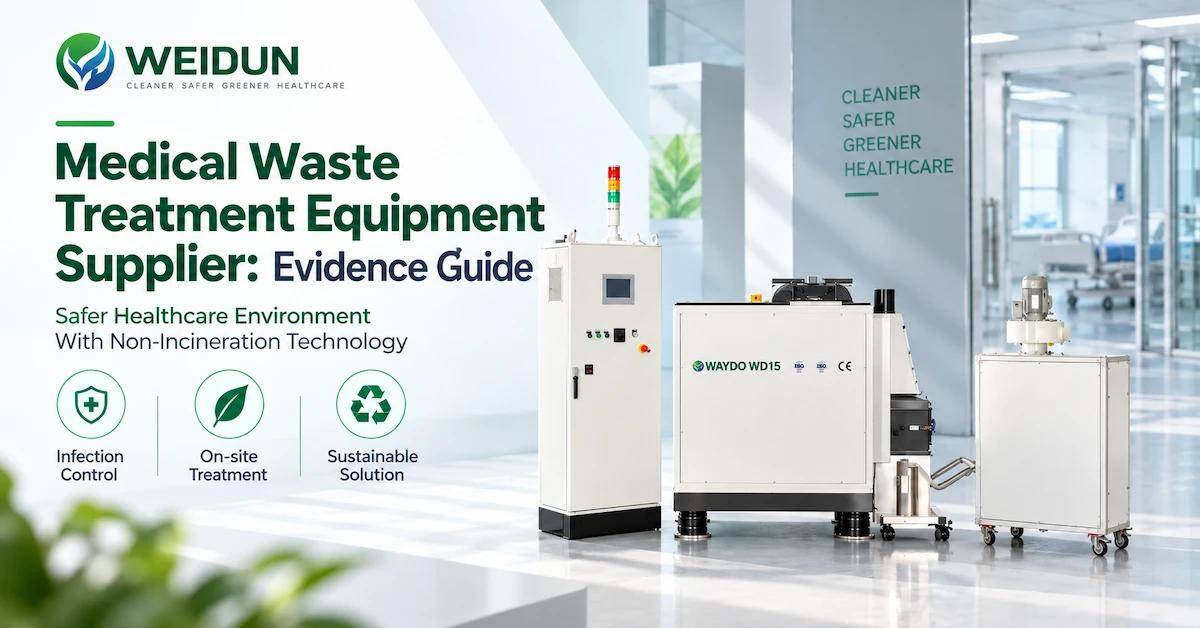
| WAYDO WD05 | 150-liter chamber, approximately 18 kg/h, up to 100 beds, 170 x 80 x 190 cm, approximately 800 kg | Small hospitals, clinics, dental facilities and laboratories |
| WAYDO WD15 | 170-liter chamber, approximately 40 kg/h, up to 300 beds, 160 x 90 x 200 cm, approximately 900 kg | Medium healthcare facilities and laboratory clusters |
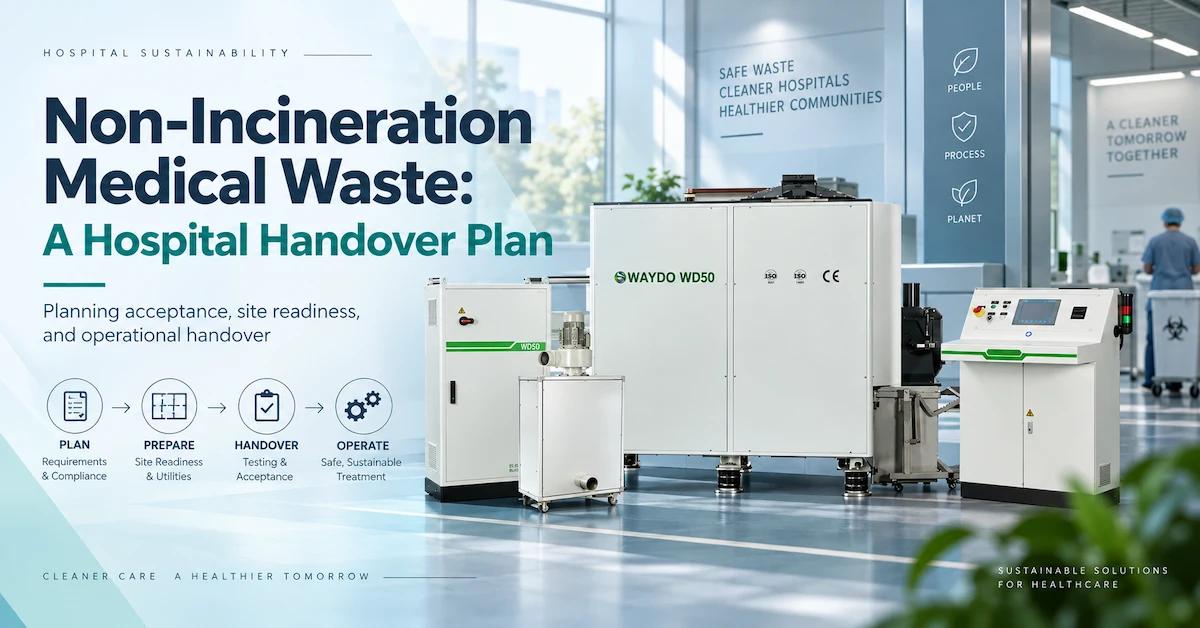
| WAYDO WD50 | 450-liter chamber, approximately 115 kg/h, up to 600 beds, 2475 x 1200 x 2780 mm, approximately 1800 kg | Larger hospitals, medical campuses and healthcare groups |
| WAYDO WD330 | Large-scale model family; request verified capacity and engineering specifications | Regional treatment centers, centralized projects and multi-unit installations |
These figures should be treated as public reference information rather than a final performance guarantee. Actual capacity may change according to waste density, moisture, loading method, cycle settings, operating hours and local requirements.
What Materials Can FHT Treat?
The FHT system is designed for treatable infectious healthcare waste. The material list should always be checked against the manufacturer's written acceptance criteria and the local authority's waste classification rules.
| Waste category | Examples | Project notes |
|---|---|---|
| General infectious waste | Surgical drapes, gauze, compresses, bandages, gloves, gowns, masks and shoe covers | Common feed category after correct segregation |
| Disposable care items | Single-use care kits, tubing, filters and medical device components | Check density and material mix |
| Laboratory waste | Culture media, nutrient plates, sampling materials, plastic and glass disposables | Confirm chemical contamination and container limits |
| Sharps | Needles, syringes, scalpels, blades and lancets | Must be collected and managed according to approved sharps procedures |
| Dialysis waste | Dialysis filters, blood-circulation circuits and tubing | Confirm liquid content and loading instructions |
| Clinical residues | Small body parts and dental fragments | Must be reviewed against local pathological waste rules |
| Pharmaceutical and bioprocess materials | Expired vaccines and selected non-conforming production consumables | Requires project-specific acceptance confirmation |
| Other materials | Sanitary towels, nappies, catheters, urine bags, stoma bags and plastic containers | Confirm moisture and composition |
The public Weidun treatable-materials page excludes:
- Radioactive materials
- Flammable or explosive compounds
- Stones, wood and other non-medical inert solids
Chemical solvents, cytotoxic drugs, mercury-containing items, pressurized containers and unknown liquids should not be included in a project feed plan without written technical confirmation.
For a complete material review, visit the infectious medical waste treatment materials page.
What Happens to the Residue After Treatment?
The residue is not the same as untreated medical waste. The original material has been shredded, heated and cooled. It may be dry, unrecognizable and biologically inactive after a validated cycle.
There are three separate questions that a buyer should ask:
- Has the treatment cycle achieved the required microbiological performance?
- Has the waste classification changed under local law?
- Will the receiving facility accept the treated residue?
These questions should not be merged into a single statement.
A sterilization result does not automatically create permission for unrestricted disposal. The legal status of the output depends on the jurisdiction, waste category, test results and receiving facility.
Some projects may direct the residue to a municipal solid waste facility. Other projects may evaluate energy recovery or RDF-related processing. The decision should be supported by:
- Local waste classification
- Written regulator guidance
- Laboratory test results
- Residue composition
- Moisture content
- Receiving-facility specifications
- Transport documentation
You can review the manufacturer's description of waste-to-energy options, but the final route should be confirmed before equipment commissioning.
How Hospitals Should Evaluate an FHT Project
A hospital should evaluate the complete operating system rather than only the equipment price.
1. Waste quantity
Measure actual waste for at least several representative days. Include weekends, surgery peaks and seasonal changes when relevant.
2. Waste composition
A machine sized for a mostly soft-plastic waste stream may perform differently with high textile, glass, metal or liquid content.
3. Room and building requirements
Review:
- Floor loading
- Door width and ceiling height
- Electrical supply
- Water connection
- Drainage
- Ventilation
- Exhaust filtration
- Fire protection
- Cleaning access
- Residue storage
- Operator movement
4. Validation evidence
Ask for cycle validation information that matches the model and operating conditions being purchased.
5. Operator workflow
The best equipment can still underperform when loading rules are unclear. The supplier should provide operating training, maintenance training and emergency procedures.
6. Data and reporting
Ask whether the system records:
- Cycle ID
- Date and time
- Operator
- Load weight
- Temperature profile
- Alarm events
- Maintenance activity
- Residue batch
- Remote service information
7. Residue acceptance
Confirm the downstream disposal route before signing the project contract.
8. Service support
Review installation, commissioning, warranty, preventive maintenance, spare parts, remote diagnosis and response times. Weidun describes these services on its technical service page.
Common Questions About FHT Medical Waste Sterilization
Is FHT the same as an autoclave?
No. An autoclave normally uses externally generated steam and pressure. FHT uses mechanical friction created by high-speed shredding to generate heat inside the treatment chamber. The two technologies should be compared by capacity, validation, utilities, maintenance, residue route and local acceptance.
Does FHT burn medical waste?
No. The public FHT description presents it as a non-burning process. It is designed to treat infectious waste through mechanical shredding, frictional heating, sterilization and cooling.
Does FHT require chemical disinfectants?
The public Weidun FHT page states that no chemical additives are required. That does not eliminate the need for normal cleaning chemicals in the treatment room or for facility-wide infection-control procedures.
What temperature does the FHT process reach?
The public technical page describes an operating temperature of approximately 150 °C, with a published thermal profile in the 135–150 °C range. The exact cycle should be verified for the selected model, load and validation protocol.
What does 6 Log10 sterilization mean?
It describes a six-order-of-magnitude reduction in viable microorganisms under defined test conditions. Buyers should request the complete validation report, including the organism, load, sensor locations and acceptance criteria.
Can FHT treat sharps?
The public treatable-materials page lists needles, syringes, scalpels, blades and lancets after proper collection. Sharps handling must follow the manufacturer's loading procedure and local regulation.
Can radioactive waste enter the FHT system?
No. Radioactive materials are listed as non-treatable. They require a separate regulated management route.
Can pharmaceutical or chemical waste enter the chamber?
Some pharmaceutical and bioprocess materials may be listed as treatable, but chemical and pharmaceutical waste is not a single uniform category. Solvents, cytotoxic compounds, mercury, unknown liquids and flammable materials require written confirmation before inclusion.
Is the residue automatically ordinary municipal waste?
Not automatically. The output may be suitable for non-hazardous disposal or energy recovery after validation and regulatory approval. The receiving facility must also accept it.
How long does one FHT cycle take?
The public FHT process information states a cycle time of approximately 25 to 35 minutes. Actual throughput depends on loading, waste composition, cycle settings, cooling and discharge operations.
Is FHT suitable for a small clinic?
A small clinic may consider a smaller model such as the WAYDO WD05, subject to a waste-volume and feed-compatibility review. The correct selection should be based on measured waste generation, not bed count alone.
Can an FHT system be installed inside a hospital?
The product page describes fixed systems for hospitals, laboratories and treatment centers. The installation still requires a site survey covering access, floor loading, electricity, water, drainage, ventilation and residue handling.
What should a buyer request before ordering?
Request the model data sheet, capacity definition, utilities list, layout drawing, material acceptance list, validation documents, warranty terms, spare-parts plan, training scope, commissioning procedure and local compliance support.
Discuss Your Waste Volume and Site
Final Takeaway
FHT medical waste sterilization is best understood as a complete treatment sequence rather than a single heating step.
The process starts with segregation and controlled loading. It then uses high-torque shredding to open and reduce the waste, continuous mixing to distribute the material, mechanical friction to generate heat, a controlled sterilization phase to inactivate microorganisms and water injection to cool the treated output.
The final residue can be dry, unrecognizable and significantly reduced in volume and weight. Its disposal or energy-recovery route must still be confirmed through local regulations, testing and receiving-facility requirements.
For healthcare facilities, the most important evaluation questions are:
- Does the system match the actual waste stream?
- Is the claimed sterilization performance validated?
- Can the equipment fit the available room and utilities?
- Can operators run and maintain it safely?
- Are the records sufficient for audits?
- Is there a confirmed route for the final residue?
- Does the lifecycle cost make sense compared with current transport and disposal?
When these questions are answered together, non-incineration medical waste treatment becomes a practical engineering decision instead of a general sustainability claim.
To review the full WAYDO configuration range, visit the medical waste treatment equipment solutions page, or contact Weidun Environmental for model-specific specifications and a project assessment.