| Factor |
Autoclave System |
FHT System |
| Sterilization method |
Steam and pressure |
Mechanical friction heat |
| External steam required |
Usually required |
Not required |
| Shredding |
May require additional system |
Integrated |
| Installation complexity |
Higher |
Simplified |
| Waste reduction |
Depends on configuration |
Integrated volume reduction |
| Infrastructure cost |
Higher in some projects |
Lower requirement |
Both technologies can provide effective medical waste treatment, but the better choice depends on:
- Facility conditions
- Waste volume
- Local regulations
- Long-term operation goals
How to Calculate Return on Investment (ROI)
Hospitals should evaluate medical waste treatment investment based on measurable savings.
Potential benefits include:
Reduced Transportation Costs
On-site treatment may reduce:
- Waste collection frequency
- External transportation expenses
- Handling procedures
Lower Disposal Fees
Depending on local regulations, hospitals may reduce costs associated with:
- External treatment services
- Waste transfer
- Long-distance transportation
Improved Operational Efficiency
Automation can reduce:
- Manual handling
- Labor requirements
- Workflow complexity
Better Infection Control
Although difficult to calculate financially, improved infection control provides important value through:
- Safer working environments
- Reduced exposure risks
- Better compliance performance
Example Cost Evaluation Process for Hospitals
Before purchasing, hospitals can evaluate:
Step 1: Analyze Current Waste Management Costs
Collect:
- Monthly waste volume
- Disposal fees
- Transportation costs
- Labor expenses
Step 2: Estimate Equipment Operating Costs
Calculate:
- Electricity consumption
- Maintenance requirements
- Operator time
Step 3: Compare Long-Term Benefits
Evaluate:
- Annual savings
- Reduced disposal dependency
- Improved efficiency
This approach helps decision-makers understand the real financial impact of investing in a medical waste treatment system.
Choosing the Right System Based on Budget and Requirements
The most expensive system is not always the best solution.
Hospitals should select equipment based on:
- Actual waste volume
- Available budget
- Facility conditions
- Future expansion plans
- Regulatory requirements
Recommended approach:
Small Facilities
Focus on:
- Compact design
- Lower investment
- Easy operation
Medium Hospitals
Focus on:
- Balanced capacity
- Automation
- Stable performance
Large Healthcare Projects
Focus on:
- High processing capacity
- Long-term reliability
- Customized engineering solutions
Weidun provides different FHT medical waste treatment systems to meet various healthcare applications, including small clinics, hospitals, and large-scale medical waste projects.
How to Request a Medical Waste Treatment System Quote
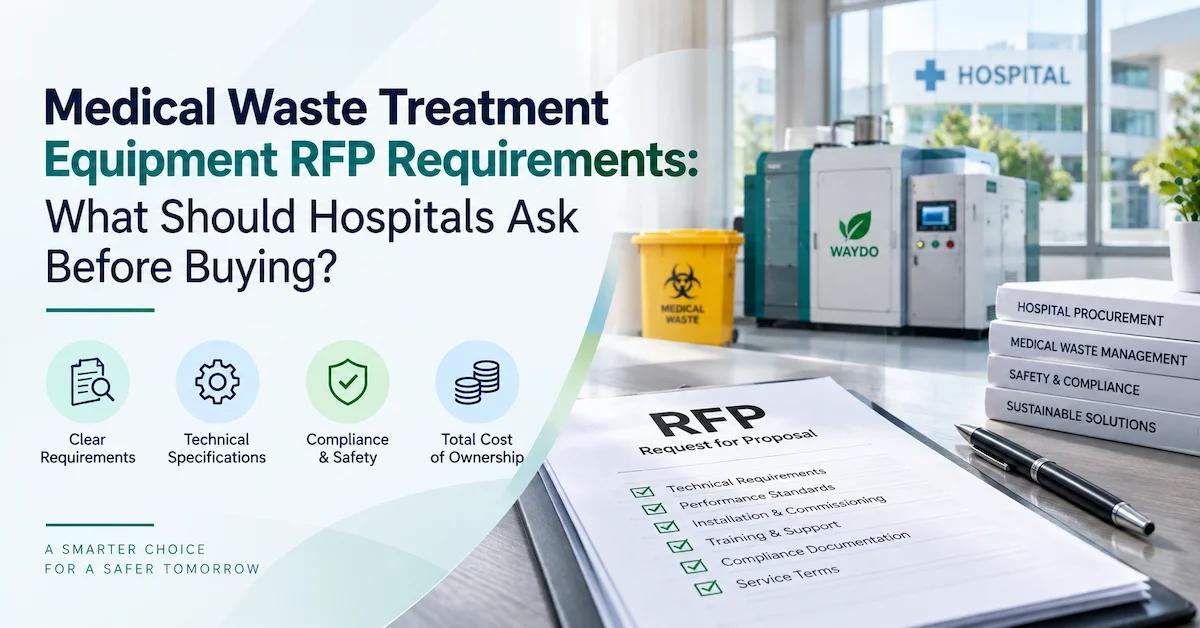
After understanding the factors that affect medical waste treatment system cost, the next step for hospitals and healthcare projects is requesting a professional quotation.
A reliable supplier cannot provide an accurate recommendation based only on the question:
“How much does a medical waste treatment system cost?”
The final configuration depends on project-specific information, including:
- Waste generation volume
- Waste categories
- Facility type
- Installation environment
- Local regulations
- Required automation level
- Treatment capacity
Providing detailed project information helps suppliers recommend the most suitable system and avoid unnecessary investment.
Information Hospitals Should Prepare Before Requesting a Quote
Before contacting a medical waste treatment equipment supplier, hospitals should prepare the following information.
1. Daily Medical Waste Volume
The most important factor is the amount of waste generated.
Provide:
- Average daily waste volume
- Maximum daily waste volume
- Peak waste periods
- Future expansion plans
Example:
A small clinic and a 1,000-bed hospital have completely different equipment requirements.
Accurate waste data helps suppliers select the correct treatment capacity.
2. Medical Waste Categories
Different waste types require different treatment considerations.
Hospitals should provide information about:
- Infectious waste
- Laboratory waste
- Surgical waste
- Sharps waste
- Disposable medical products
- Biological materials
Suppliers need to confirm whether the proposed system is suitable for the intended waste stream.
3. Facility Location and Installation Conditions
Project location affects:
- Equipment configuration
- Shipping requirements
- Installation planning
- Regulatory approval
Important information includes:
- Country and region
- Available installation area
- Building conditions
- Electricity supply
- Water availability
- Drainage conditions
4. Required Treatment Capacity
Hospitals should define:
- Required processing capacity per day
- Operating hours
- Expected future capacity growth
Choosing the correct capacity helps balance:
- Initial investment
- Operating efficiency
- Long-term value
5. Local Regulations and Compliance Requirements
Medical waste treatment is highly regulated.
Before purchasing equipment, buyers should confirm:
- Local healthcare waste regulations
- Environmental requirements
- Required certifications
- Treatment validation standards
A professional supplier should provide technical documentation to support approval processes.
How to Choose a Reliable Medical Waste Treatment System Supplier
Equipment cost is important, but supplier capability is equally critical.
A reliable supplier should provide:
Technical Expertise
Evaluate:
- Experience with healthcare projects
- Understanding of medical waste treatment
- Engineering capability
- Technical support
Manufacturing Capability
Check:
- Production capacity
- Quality control procedures
- Testing processes
- Delivery capability
Project Experience
A supplier with successful healthcare projects can better understand:
- Hospital workflows
- Installation challenges
- Operational requirements
After-Sales Support
Long-term support is essential for medical waste treatment equipment.
Important services include:
- Installation guidance
- Operator training
- Maintenance support
- Spare parts supply
- Remote technical assistance
Why Consider Weidun FHT Medical Waste Treatment Systems?
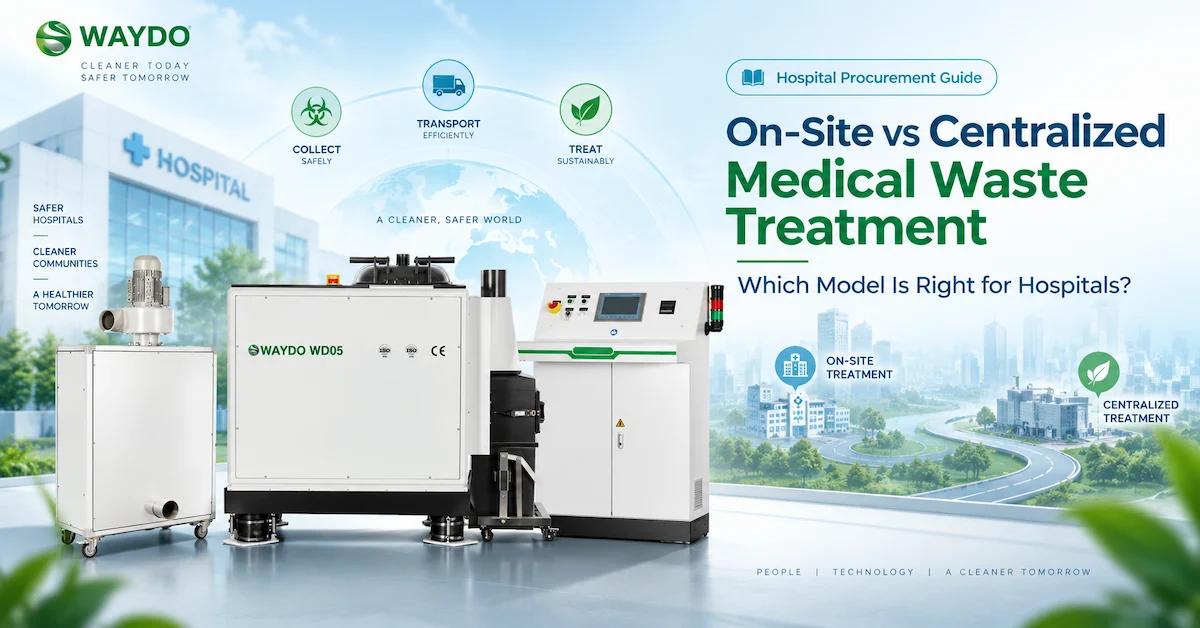
For hospitals looking for a modern non-incineration solution, Weidun provides FHT-based medical waste treatment systems designed for safe and efficient on-site processing.
The FHT technology combines:
- Mechanical shredding
- Friction heat generation
- Sterilization
- Volume reduction
Key advantages include:
- No external steam boiler
- No pressure vessel
- Integrated shredding and sterilization
- Reduced waste volume
- Improved on-site waste management efficiency
Weidun offers different system configurations for different applications:
| Model |
Suitable Application |
| WAYDO WD05 |
Small clinics, laboratories, and healthcare facilities |
| WAYDO WD15 |
Medium healthcare facilities |
| WAYDO WD50 |
Hospitals and medical centers |
| WAYDO WD330 |
Large healthcare projects and centralized treatment applications |
Selecting the correct model depends on:
- Waste generation volume
- Facility requirements
- Treatment goals
- Local regulations
Medical Waste Treatment System Cost: Common Buyer Questions
1. How much does a medical waste treatment system cost?
The cost depends on equipment capacity, technology type, installation requirements, automation level, and project specifications. A customized quotation is usually required.
2. What factors affect medical waste treatment system price?
Major factors include:
- Processing capacity
- Treatment technology
- Equipment configuration
- Installation requirements
- Maintenance requirements
- After-sales service
3. Is FHT technology more expensive than autoclave systems?
The initial investment depends on system configuration. However, FHT may reduce certain infrastructure requirements because it does not require external steam boilers or pressure vessels.
4. What medical waste treatment system is suitable for hospitals?
The suitable system depends on:
- Hospital size
- Daily waste volume
- Waste categories
- Available installation conditions
Large hospitals typically require higher-capacity systems, while smaller facilities may need compact solutions.
5. Does installation cost include training?
This depends on the supplier and project scope. Professional suppliers usually provide installation guidance, commissioning, and operator training.
6. Can medical waste treatment systems reduce operating costs?
Yes. On-site treatment systems may help reduce:
- Waste transportation costs
- Storage requirements
- External disposal dependence
- Manual handling workload
7. How long does a medical waste treatment system last?
Equipment lifespan depends on:
- Operating conditions
- Maintenance schedule
- Usage frequency
- Spare parts management
Regular maintenance helps extend system service life.
8. What information is needed to get an accurate quotation?
Suppliers typically need:
- Daily waste volume
- Waste type
- Facility location
- Required capacity
- Installation conditions
- Project requirements
9. Can FHT systems treat all types of medical waste?
No. Treatment compatibility depends on waste characteristics and local regulations. Certain hazardous materials may require specialized disposal methods.
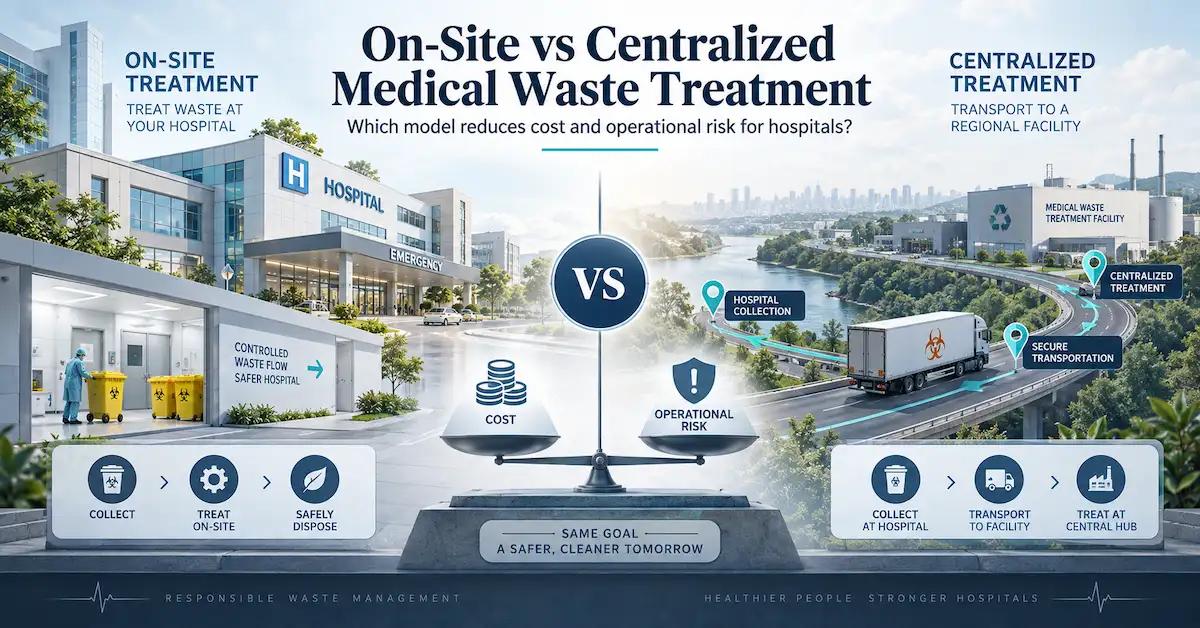
10. Why should hospitals consider on-site medical waste treatment?
On-site treatment helps hospitals improve control over waste management by reducing transportation risks, shortening storage time, and improving infection-control efficiency.
Conclusion
The cost of a medical waste treatment system depends on much more than the equipment purchase price.
Hospitals should evaluate the complete investment, including:
- Equipment configuration
- Installation requirements
- Operating expenses
- Maintenance needs
- Long-term operational value
A suitable medical waste treatment solution should provide:
- Safe sterilization
- Reliable operation
- Efficient workflow
- Sustainable waste management
- Long-term cost benefits
For healthcare facilities evaluating non-incineration treatment options, FHT technology provides an integrated approach that combines shredding, sterilization, and volume reduction in one system.
Weidun provides customized medical waste treatment systems for hospitals, laboratories, and healthcare projects worldwide.
Contact Weidun Environmental to receive a customized solution and cost evaluation based on your facility requirements.
タグ:
- FHTテクノロジー
- 非焼却技術
- 医療廃棄物処理システム
- 病院廃棄物管理
- 医療廃棄物ソリューション
- 医療廃棄物の滅菌
- 医療廃棄物処理機器の費用
- 医療廃棄物処理費用