
| 型号 |
合适的应用 |
主要功能 |
标题>
| WAYDO WD05 |
小型诊所、实验室、医疗机构 |
紧凑的设计,适合较小的废物量 |
| WAYDO WD15 |
Medium healthcare facilities |
Balanced capacity and operational efficiency |
| WAYDO WD50 |
Hospitals, medical centers, healthcare groups |
Higher processing capacity for hospital applications |
| WAYDO WD330 |
Large-scale healthcare projects and centralized treatment facilities |
Large capacity and project-based solutions |
表>
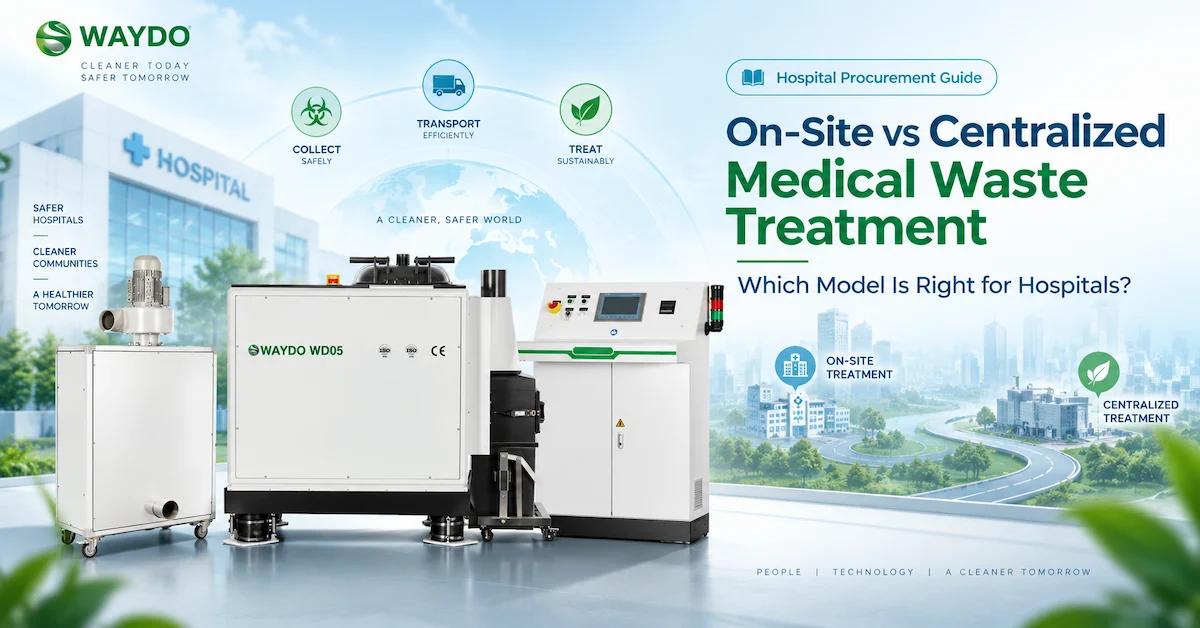
WAYDO WD05: Compact Medical Waste Treatment Solution
WAYDO WD05 is suitable for facilities that require a compact and efficient medical waste treatment system.
Typical applications include:
- Small hospitals
- Clinics
- Laboratories
- Healthcare centers
Key advantages:
- Small footprint
- Easier installation
- Reduced waste storage requirements
- Automated treatment process
For smaller facilities that need on-site treatment without complex infrastructure, WD05 provides a practical solution.
WAYDO WD15: Medium Healthcare Waste Treatment System
WAYDO WD15 is designed for medium-sized healthcare facilities requiring reliable daily processing capability.
Suitable applications:
- Community hospitals
- Medical centers
- Research institutions
Advantages:
- Improved processing capacity
- Stable operation
- Efficient waste reduction
- Suitable for continuous healthcare operations
WD15 helps facilities improve waste management efficiency while maintaining manageable operating costs.
WAYDO WD50: Hospital Medical Waste Treatment Equipment
WAYDO WD50 is one of the most suitable models for hospitals and larger healthcare facilities.
Typical applications:
- General hospitals
- Private hospital groups
- Medical campuses
- Healthcare projects
Advantages:
- Higher treatment capacity
- Integrated shredding and sterilization
- Reduced transportation requirements
- Improved infection control
For hospitals comparing traditional disposal methods with modern non-incineration solutions, WD50 provides an effective FHT-based medical waste treatment option.
WAYDO WD330: Large-Scale Medical Waste Treatment System
WAYDO WD330 is designed for larger healthcare projects requiring higher processing capability.
Suitable applications:
- Regional medical waste centers
- Government healthcare projects
- Large hospital groups
- Centralized treatment facilities
Advantages:
- Large-scale processing capability
- Automated operation
- Project-based customization
- Long-term operational reliability
For large healthcare infrastructure projects, WD330 can support centralized and sustainable medical waste management strategies.
Key Factors to Consider Before Buying Medical Waste Treatment Equipment
1. Treatment Performance and Sterilization Validation
A reliable medical waste treatment system should provide clear information about treatment performance.
Buyers should evaluate:
- Sterilization temperature
- Treatment duration
- Microbial reduction capability
- Validation reports
- Testing procedures
Hospitals should avoid selecting equipment based only on marketing claims.
Important questions include:
- Has the system been tested with real medical waste?
- Are biological indicators used?
- Is performance documentation available?
- Does the system meet local requirements?
2. Operating Cost and Total Ownership Cost
The purchase price is only one part of the investment.
Hospitals should consider total lifecycle costs, including:
Initial Investment
Includes:
- Equipment purchase
- Installation
- Facility preparation
- Training
Operating Costs
Includes:
- Electricity consumption
- Water usage
- Labor requirements
- Consumables
Maintenance Costs
Includes:
- Spare parts
- Preventive maintenance
- Technical support
- Equipment downtime
A system with a lower purchase price may create higher long-term costs if it requires frequent maintenance or additional infrastructure.
3. Installation and Infrastructure Requirements
Before purchasing, hospitals should confirm:
Space Requirements
Consider:
- Equipment dimensions
- Loading area
- Maintenance space
- Waste collection routes
Utility Requirements
Evaluate:
- Electrical supply
- Water requirements
- Drainage
- Ventilation
Building Conditions
The installation area should support:
- Safe operation
- Easy maintenance
- Efficient workflow
FHT systems can provide installation advantages because they do not require external steam boilers or pressure vessels.
4. Automation and Operation Requirements
Modern hospitals increasingly prefer automated medical waste treatment equipment.
Automation benefits include:
- Reduced manual handling
- Improved safety
- More consistent treatment performance
- Lower operator workload
Important automation features may include:
- Automatic feeding
- Process monitoring
- Temperature control
- Data recording
- Alarm systems
5. Maintenance and After-Sales Support
Reliable after-sales service is essential for healthcare equipment.
Before purchasing, hospitals should ask suppliers about:
- Installation support
- Operator training
- Spare parts availability
- Remote technical assistance
- Maintenance schedule
- Response time
A professional supplier should provide long-term technical support instead of only delivering equipment.
Medical Waste Treatment Equipment Cost Factors
The cost of medical waste treatment equipment depends on many factors.
There is no universal price because each project has different requirements.
Main cost factors include:
| Cost Factor |
Impact |
标题>
| Processing capacity |
Larger systems require higher investment |
| Technology type |
Different treatment methods have different infrastructure needs |
| Automation level |
Advanced control systems increase efficiency |
| Installation conditions |
Facility modifications affect project cost |
| Waste volume |
Determines required equipment size |
| Service requirements |
Training and maintenance influence lifecycle cost |
表>
Hospitals should evaluate return on investment based on:
- Reduced transportation costs
- Lower storage requirements
- Improved infection control
- Reduced labor requirements
- Long-term operational efficiency
Choosing Between Centralized and On-Site Medical Waste Treatment
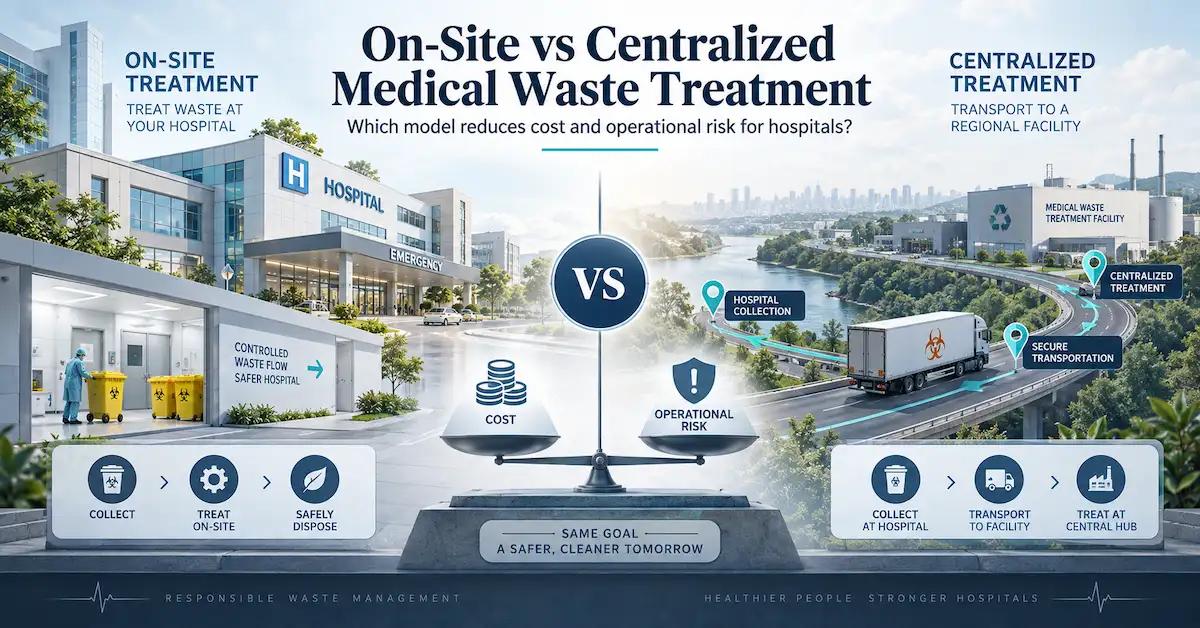
Hospitals traditionally rely on centralized treatment models.
The typical workflow:
Hospital
↓
Temporary storage
↓
Transportation
↓
External treatment facility
↓
Final disposal
This approach may create:
- Transportation costs
- Storage risks
- Additional handling steps
On-site medical waste treatment provides an alternative approach.
Workflow:
Waste generation
↓
On-site treatment
↓
Sterilized output
↓
Final disposal
Benefits:
- Faster waste processing
- Reduced transportation dependency
- Improved control
- Better infection prevention
For hospitals seeking greater control over waste management, FHT-based systems provide an effective on-site solution.
How to Choose a Reliable Medical Waste Treatment Equipment Supplier
Selecting the right supplier is just as important as selecting the right equipment.
Medical waste treatment systems are long-term investments that directly affect:
- Hospital safety
- Waste management efficiency
- Regulatory compliance
- Operating costs
- Daily workflow
A reliable supplier should provide more than equipment delivery. They should support the entire project lifecycle, including:
- Technical consultation
- Equipment selection
- Installation planning
- Operator training
- Maintenance support
- Spare parts supply
1. Evaluate Supplier Technical Experience
Medical waste treatment equipment requires specialized engineering knowledge.
A professional supplier should understand:
- Healthcare waste characteristics
- Sterilization requirements
- Infection-control standards
- Treatment regulations
- Facility workflow
Hospitals should evaluate:
- Years of industry experience
- Previous healthcare projects
- Technical team capability
- Research and development strength
- International project experience
A supplier with strong technical experience can recommend a system that matches the hospital’s actual needs instead of simply selling a standard machine.
2. Check Equipment Quality and Manufacturing Capability
Before purchasing, hospitals should evaluate the supplier’s manufacturing capability.
Important factors include:
Equipment Design
Review:
- Machine structure
- Material selection
- Safety features
- Automation design
- Maintenance accessibility
Quality Control
A reliable manufacturer should have quality procedures covering:
- Component inspection
- Assembly testing
- Performance testing
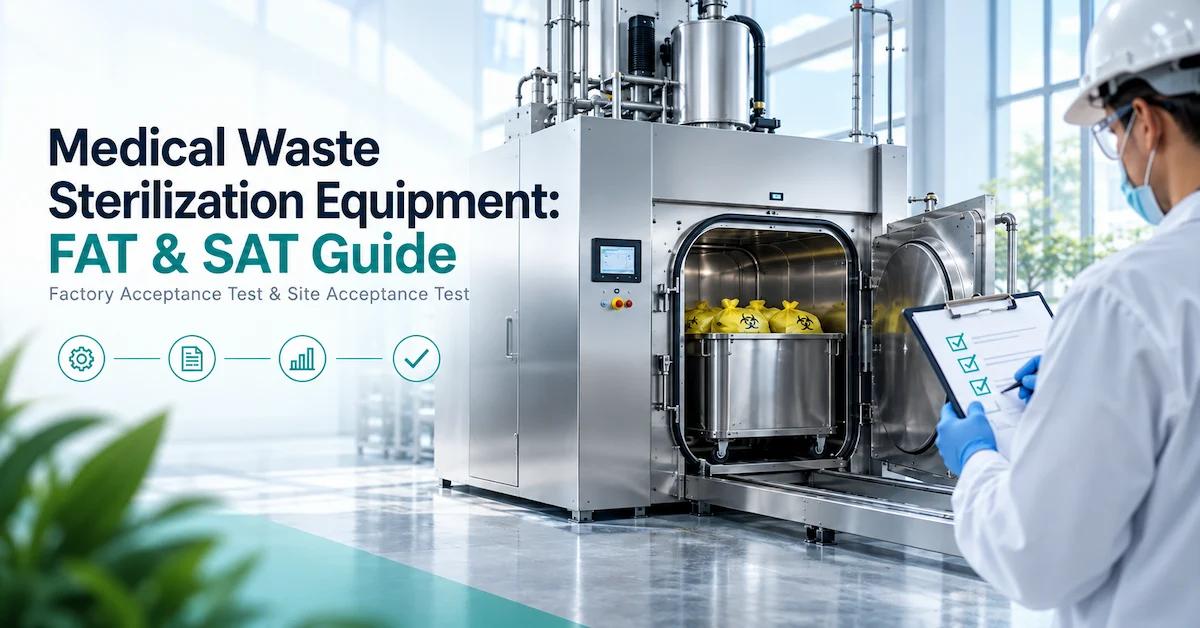
- Factory acceptance testing
Production Capability
Consider:
- Manufacturing capacity
- Delivery capability
- Spare parts availability
- Production consistency
3. Review Certifications and Compliance Documentation
Healthcare equipment must meet strict safety and environmental requirements.
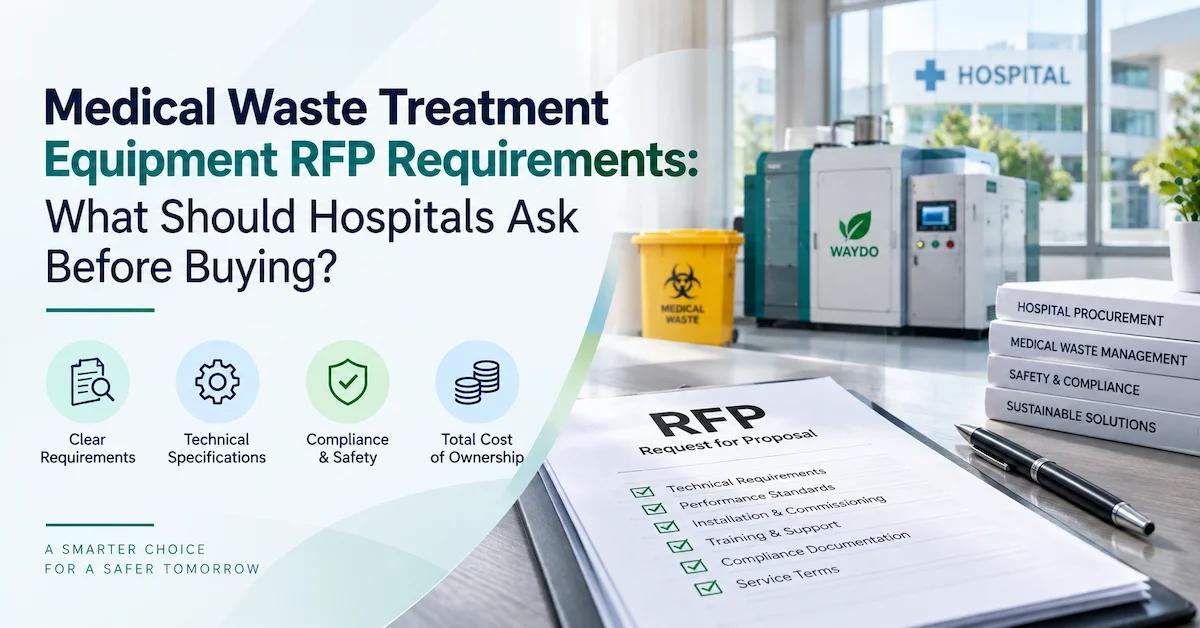
Before purchasing, buyers should request:
- Product certifications
- Test reports
- Sterilization validation documents
- Technical specifications
- Compliance information
The required certifications may vary depending on:
- Country regulations
- Hospital standards
- Government project requirements
A professional supplier should clearly provide technical documentation to support project approval.
4. Consider Customization Capability
Different hospitals have different waste volumes, layouts, and operating requirements.
A suitable supplier should provide customized solutions based on:
- Daily waste output
- Available installation space
- Waste categories
- Operating schedule
- Local regulations
Customization may include:
- Equipment model selection
- Layout planning
- Treatment workflow design
- Automation configuration
- Project-specific recommendations
Medical Waste Treatment Equipment Procurement Checklist
Before placing an order, hospitals should confirm the following information:
| Evaluation Item |
Questions to Ask |
标题>
| Treatment capacity |
Can the system handle current and future waste volume? |
| Waste compatibility |
What types of medical waste can be processed? |
| Sterilization performance |
Are validation reports available? |
| Installation requirements |
What utilities and space are required? |
| Operation process |
How many steps are required during daily operation? |
| Maintenance |
Which components require regular replacement? |
| Training |
Is operator training included? |
| Technical support |
Is after-sales support available? |
| Spare parts |
Are replacement parts easy to obtain? |
| Project experience |
Has the supplier completed similar healthcare projects? |
表>
Common Mistakes Hospitals Should Avoid When Buying Medical Waste Treatment Equipment
Choosing Equipment Only Based on Price
The cheapest equipment is not always the most cost-effective solution.
A lower initial price may result in:
- Higher energy costs
- More frequent maintenance
- Additional equipment requirements
- Reduced operational efficiency
Hospitals should evaluate total ownership costs instead of only purchase price.
Ignoring Future Expansion Needs
Healthcare facilities often grow over time.
Selecting equipment based only on current waste volume may create problems later.
Hospitals should consider:
- Future patient growth
- Additional departments
- Increased laboratory activities
- Expansion projects
Overlooking Installation Requirements
Some buyers focus only on equipment specifications but ignore:
- Facility preparation
- Utility connections
- Workflow design
- Maintenance access
Proper installation planning is essential for stable operation.
Selecting Technology Without Considering Workflow
Different technologies create different operational processes.
Hospitals should evaluate:
- Waste handling steps
- Operator workload
- Storage requirements
- Transportation needs
- Final disposal process
The best system is the one that fits the hospital’s complete waste management workflow.
Why Hospitals Are Considering FHT Medical Waste Treatment Systems
As hospitals look for safer and more sustainable waste management solutions, FHT technology has become an attractive alternative to traditional treatment methods.
Weidun’s FHT medical waste treatment systems combine:
- Mechanical shredding
- Friction heat sterilization
- Volume reduction
- Automated operation
The technology is designed for healthcare facilities that need:
- On-site medical waste treatment
- Reduced transportation dependency
- Lower storage pressure
- Improved infection control
Compared with conventional treatment workflows, FHT simplifies the process by integrating multiple treatment steps into one system.
Recommended Medical Waste Treatment Equipment for Different Hospital Applications
| Application |
Recommended Solution |
Reason |
标题>
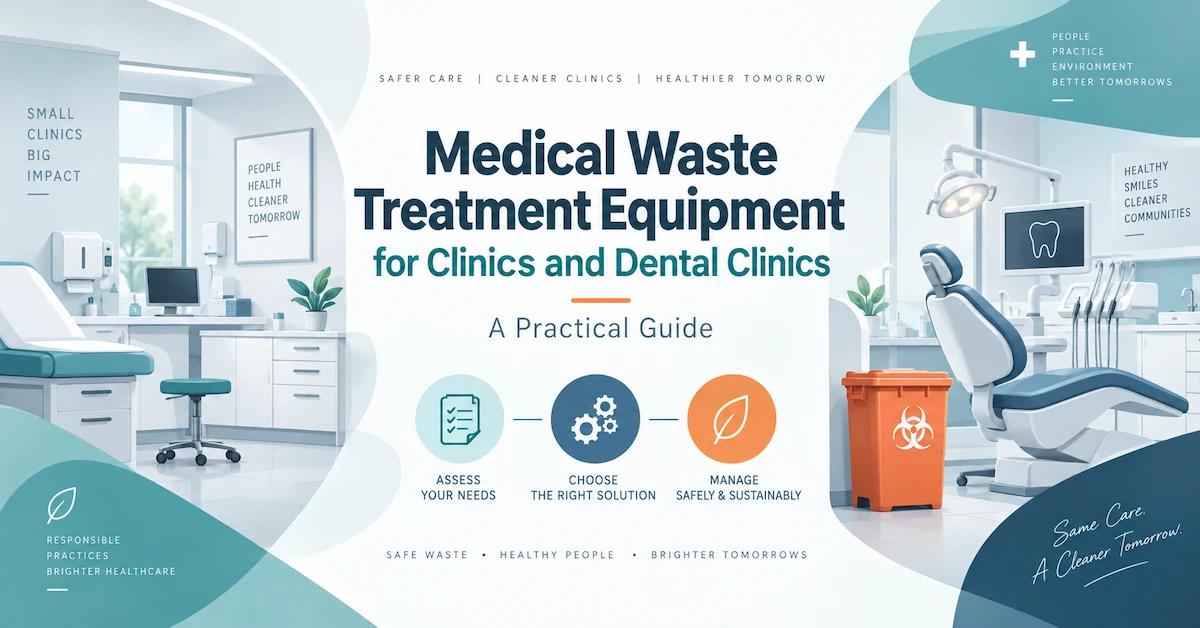
| Small clinics |
WAYDO WD05 |
Compact design and suitable processing capacity |
| Medium hospitals |
WAYDO WD15 |
Balanced performance and operational efficiency |
| Large hospitals |
WAYDO WD50 |
Higher capacity and hospital-focused application |
| Government healthcare projects |
WAYDO WD330 |
Large-scale processing capability |
表>
FAQ About Medical Waste Treatment Equipment Buying
1. What should hospitals consider before buying medical waste treatment equipment?
Hospitals should evaluate waste volume, waste type, treatment technology, installation requirements, operating costs, maintenance, and supplier support.
2. What is the best medical waste treatment system for hospitals?
The best system depends on hospital size, waste generation volume, regulations, and operational requirements. Different facilities may require different solutions.
3. Is FHT technology suitable for hospitals?
Yes. FHT systems are designed for hospitals, clinics, laboratories, and healthcare facilities requiring non-incineration medical waste treatment.
4. What is the difference between autoclave and FHT treatment?
Autoclaves use steam and pressure for sterilization, while FHT systems use mechanical friction to generate heat while shredding waste.
5. How much does medical waste treatment equipment cost?
The cost depends on equipment capacity, technology type, installation requirements, automation level, and project specifications.
6. How long does installation take?
Installation time depends on equipment model, facility preparation, and project requirements. Professional suppliers should provide installation planning before delivery.
7. What medical waste can treatment equipment process?
Compatible waste may include infectious clinical waste, contaminated disposable supplies, laboratory waste, and other approved healthcare waste categories.
8. Do hospitals need special training after purchasing equipment?
Yes. Operators should receive training covering equipment operation, safety procedures, maintenance, and emergency handling.
9. Why choose on-site medical waste treatment?
On-site treatment helps hospitals reduce transportation risks, shorten storage time, improve infection control, and increase waste management efficiency.
10. How can hospitals select a reliable medical waste treatment equipment supplier?
Hospitals should evaluate technical experience, manufacturing capability, certifications, project experience, customization ability, and after-sales support.
Conclusion
Choosing the right medical waste treatment equipment is a strategic decision for hospitals and healthcare organizations.
The ideal system should not only provide effective sterilization but also support:
- Safe waste handling
- Efficient workflow
- Lower operational costs
- Sustainable healthcare goals
- Long-term reliability
Before purchasing, hospitals should carefully evaluate:
- Treatment technology
- Waste capacity
- Installation requirements
- Maintenance needs
- Supplier capability
For healthcare facilities seeking an advanced non-incineration solution, Weidun provides FHT-based medical waste treatment systems designed for hospitals, laboratories, and healthcare projects.
With integrated shredding, friction heat sterilization, and automated operation, Weidun helps healthcare organizations improve medical waste management efficiency and safety.
Contact Weidun Environmental to discuss your medical waste treatment requirements and receive a customized solution recommendation.
common.tag:
- FHT技术
- 非焚烧技术
- 医疗废物处理系统
- 医院废物管理
- 医疗废物处理方案
- 医疗废物灭菌
- 医疗设备采购指南
- 医疗废物设备