
What Is the Best Medical Waste Treatment Route for a Clinic?
The best route depends on four facts: the waste stream the clinic is legally allowed to treat, the quantity that reaches the treatment room, the hours and space available, and the evidence required by the destination authority. A clinic should first separate ordinary municipal waste, infectious soft waste, sharps, pharmaceutical items, chemicals and other exceptional streams. It should then compare three boundaries: licensed off-site collection, treatment at a shared group facility, and an on-site medical waste treatment system sized around the measured compatible stream.
A small clinic should not buy an industrial unit simply because it wants to reduce collection visits. A large outpatient network should not compare a collection invoice with an equipment price alone. The meaningful comparison includes containers, internal handling, secure storage, staff time, utilities, maintenance, validation, residue acceptance, permits and service continuity. The decision is therefore a commercial investigation and an RFQ exercise, not a generic question about whether sterilization is useful.
WEIDUN supplies WAYDO frictional heat treatment equipment for healthcare and related applications. Its published process description combines shredding, mixing, frictional heating, cooling and discharge. The equipment pages provide model data such as vessel volume and stated production capacity. The buyer still needs a written feed description, a site review, a model-specific operating plan and applicable local approvals before routine use.
For an initial discussion, send the installation country, clinic type, number of treatment rooms, average and peak waste weights, collection pattern, waste categories, available room dimensions and preferred operating schedule. Do not send patient-identifiable information or ask staff to open infectious bags for a purchasing survey.
Who Should Use This Clinic Treatment Guide?
This guide is written for outpatient medical clinics, urgent-care centers, ambulatory surgery facilities, diagnostic centers, vaccination sites, community health centers and clinic groups with a common waste-management program. It is particularly useful when the buyer is deciding whether to continue with a licensed contractor, create a shared treatment hub or request compact equipment for a controlled on-site workflow.
The buyer may be a clinic owner, facilities manager, environmental health and safety manager, infection-prevention professional, public-health planner or purchasing lead. Each role sees a different risk. The owner needs predictable cost and service. The operator needs a safe, repeatable workflow. Infection prevention needs a defensible segregation and release procedure. Engineering needs floor loading, electrical, ventilation, drainage, access and maintenance information. Procurement needs a comparable scope, commercial assumptions and an evidence package.
Do not reduce the question to bed count. Clinics often have few beds but high procedure turnover, or many consultation rooms with very little infectious waste. A dental practice may need a different assessment from a dialysis center. A laboratory collection point may have chemical or pharmaceutical materials that must not be included in a general infectious load. Measure the stream that the proposed equipment is actually intended to receive.
Start With Segregation, Not a Treatment Machine
Map every stream at the point of generation
Write down what is placed in each container after a procedure. “Clinical waste” is an administrative label, not a sufficiently detailed treatment specification. A buyer should distinguish contaminated dressings, disposable gowns, selected tubing, swabs, gloves, empty non-hazardous packaging, sharps, pharmaceuticals, chemicals and other exceptional items. Record whether the material is wet, dense, sealed, rigid, flexible, liquid-containing or likely to damage a shredder.
The WHO health-care waste fact sheet separates infectious, pathological, sharps, chemical, pharmaceutical, cytotoxic and radioactive categories. That classification is a useful planning reference, but it does not mean one device can accept every category. Local law, the treatment authorization, the manufacturer's instructions and the receiving facility's requirements remain decisive.
Keep excluded streams visible
Common exclusions from a general compatible load may include free chemicals, cytotoxic medicines, pharmaceutical products, radioactive material, pressurized cylinders, batteries, aerosols, explosive items and certain pathological materials. Amalgam or mercury-bearing material requires its own controlled route. Sharps require a written assessment of container type, loading procedure and the selected machine's validated limitations; never assume that a general waste shredder is a sharps policy.
Segregation should be designed so that the clinic does not need to reopen infectious bags. Use point-of-use containers, closed transfer bins and an approved inspection method. Train the people who generate waste, the people who move it and the person who releases a treated batch. A purchasing plan that depends on manual sorting of mixed infectious bags is a workflow risk, not a low-cost solution.
| Waste stream | Record for the RFQ | Decision before treatment |
|---|---|---|
| Compatible infectious soft waste | Weight, volume, bag type, moisture and collection time | Confirm accepted material and batch boundary |
| Sharps | Container type, fill level, quantity and handling method | Use only a documented, approved route |
| Pharmaceutical or chemical items | Product class, container, free liquid and quantity | Separate licensed route unless formally accepted |
| Ordinary waste | Volume, collection cost and contamination checks | Keep out of the infectious equipment load |
| Exceptional material | Description, source and local classification | Escalate to the competent waste manager |
Build a Seven-Day Clinic Waste Baseline
A useful baseline records every collection round for at least seven normal operating days and includes one busier day if the clinic has a predictable weekly peak. Weigh closed containers with a calibrated scale or an approved equivalent. Record the gross weight, container tare if known, stream, source area and time. If weighing each container is not practical, use a documented sampling method and state its limitations.
Keep three quantities separate. First, total waste generated tells you how much material the clinic handles. Second, compatible waste accepted for the proposed process sizes the equipment. Third, treated and released output provides the denominator for cost and performance comparisons. Do not divide an equipment price by total clinic waste treatment equipment when half of the waste is ordinary or must follow a specialist route.
Record the peak collection round, not only the weekly average. A clinic that generates 12 kilograms across a week may still need secure storage for two days if the contractor comes once a week. Conversely, a multi-site group may aggregate compatible loads at a service hub and need a larger model. Storage, collection frequency and treatment frequency are connected decisions.
Measure volume as well as mass
Two clinics with the same daily weight can require different equipment. Lightweight gowns and packaging occupy more space per kilogram than dense wet materials. Record container size, fill level and whether the bags are compacted. The chamber vessel volume shown on a product page is not automatically the permitted waste volume. The manufacturer must define the loading envelope for the selected material and configuration.
Use a simple data sheet with columns for date, clinic area, stream, gross weight, tare, net weight, container volume, moisture note, exceptional item note and collection time. Review the sheet with infection prevention and facilities staff. The purpose is to improve the purchasing specification, not to create a new unsafe handling task.
Compare Off-Site, Shared and On-Site Clinic Solutions
Licensed off-site collection is often sensible for a single small clinic with low and irregular compatible waste. Its advantages can include simple staffing, limited equipment responsibility and a clear contractor interface. Its risks may include storage duration, transport exposure, collection delays, minimum charges and dependence on a service route.
A shared treatment hub can suit a clinic group that wants to aggregate loads without placing equipment in every branch. It requires controlled transport to the hub, a chain of custody, adequate hub capacity and a clear allocation of operating cost. A hub may be a treatment room at a flagship clinic, a laboratory or another authorized facility, but the authorization and residue route must be explicit.
On-site treatment can become attractive when compatible waste is predictable, transport is difficult, storage is constrained, or several nearby clinics can share a properly staffed installation. It adds responsibilities: room design, utilities, training, maintenance, validation, batch records, residue handling and local regulatory communication. A lower invoice from a contractor does not automatically follow, and a higher equipment capacity does not solve poor segregation.
When comparing clinic medical waste disposal solutions, put the same waste boundary and responsibility matrix into every quotation. This prevents a low collection price from being compared with an equipment price that excludes labor, room work, validation or residue transfer.
| Route | Best fit | RFQ questions |
|---|---|---|
| Licensed collection | Small, irregular or specialist streams | Minimum charge, pickup interval, storage and certificates |
| Shared clinic hub | Several nearby sites with predictable compatible waste | Transport, custody, hub capacity and release records |
| On-site equipment | Stable load, suitable room and trained operator | Model fit, utilities, validation, service and residue route |
For a broader comparison of operating boundaries, use WEIDUN's on-site versus centralized treatment guide. A clinic should compare the same accepted waste, the same release condition and the same support obligations on every quotation.
What Does Medical Waste Treatment Equipment for Clinics Need to Do?
Equipment selection should cover more than the treatment chamber. A clinic solution needs a defined input boundary, a safe loading method, a process control sequence, operator protection, a record of each batch, a discharge method, a cleaning procedure, maintenance access and an approved route for the output. Ask the supplier to describe the complete workflow from the closed clinic container to the released residue.
WEIDUN describes FHT as an integrated sequence involving shredding, mixing, frictional heating, cooling and discharge. The process page lists manufacturer-stated indicators including a treatment stage around 150 degrees Celsius, a stated six-log microbial reduction target and an approximately 25 to 35 minute total cycle. These indicators require configuration-specific evidence. A total cycle is not automatically the same as exposure time, and a target is not proof for every mixture or organism.
When evaluating medical waste treatment equipment for clinics, ask which materials are accepted, which are excluded, what container form is required, how a failed or interrupted cycle is controlled, how records are retained and what utilities are required. Confirm whether loading, residue bins, training, commissioning, spare parts and service visits are included in the quotation.
For medical waste sterilization equipment for clinics, the word “sterilization” should be tied to a defined load, method and release procedure. Ask the supplier to identify the evidence behind the offered configuration instead of treating the label as a universal result.
Separate manufacturer data from project evidence
Manufacturer data is useful for shortlisting. Project evidence must demonstrate that the offered configuration, operating recipe and agreed load meet the acceptance criteria for the destination. Request the tested model, sample description, cycle parameters, measurement method, test organism where applicable, result, report date and limitations. Do not write a universal claim from a brochure line.
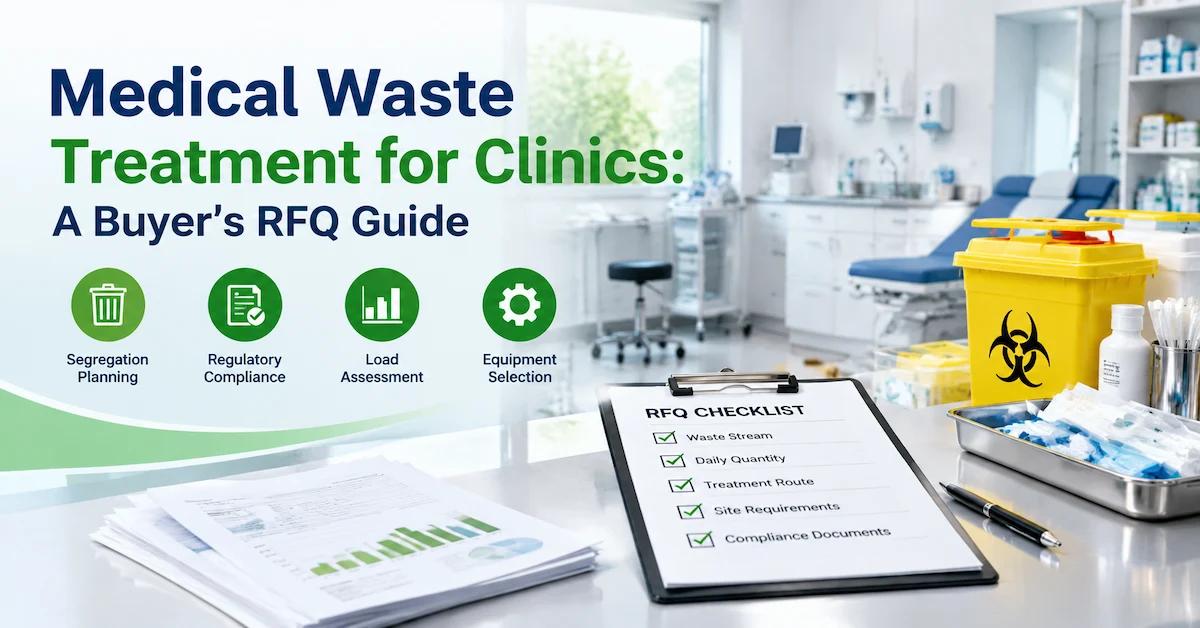
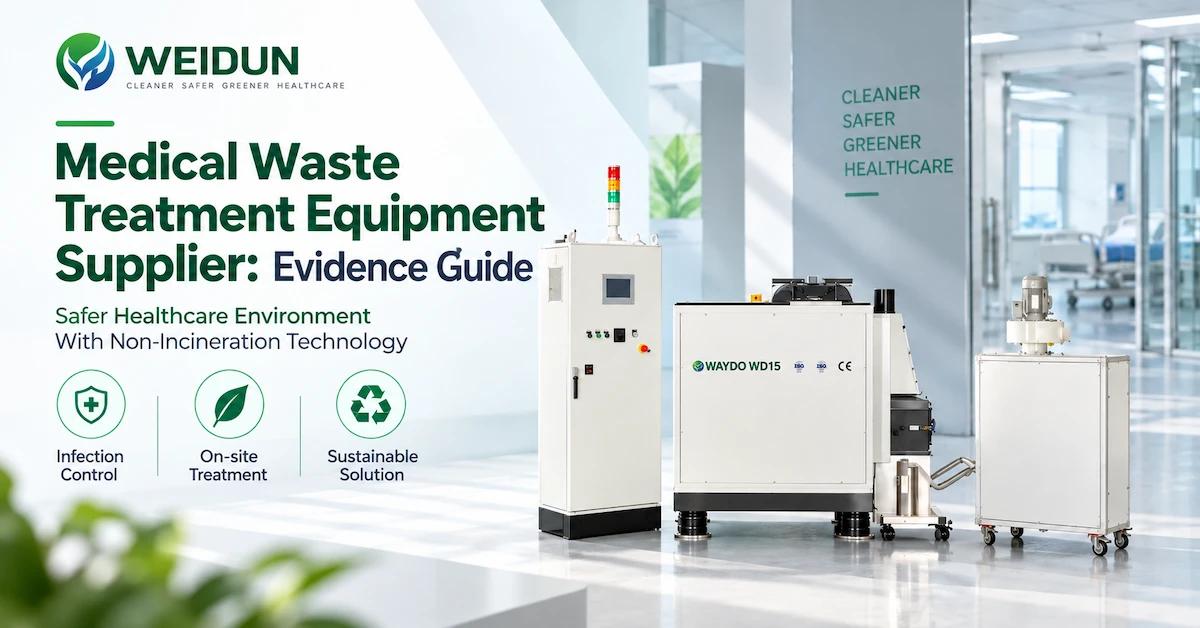
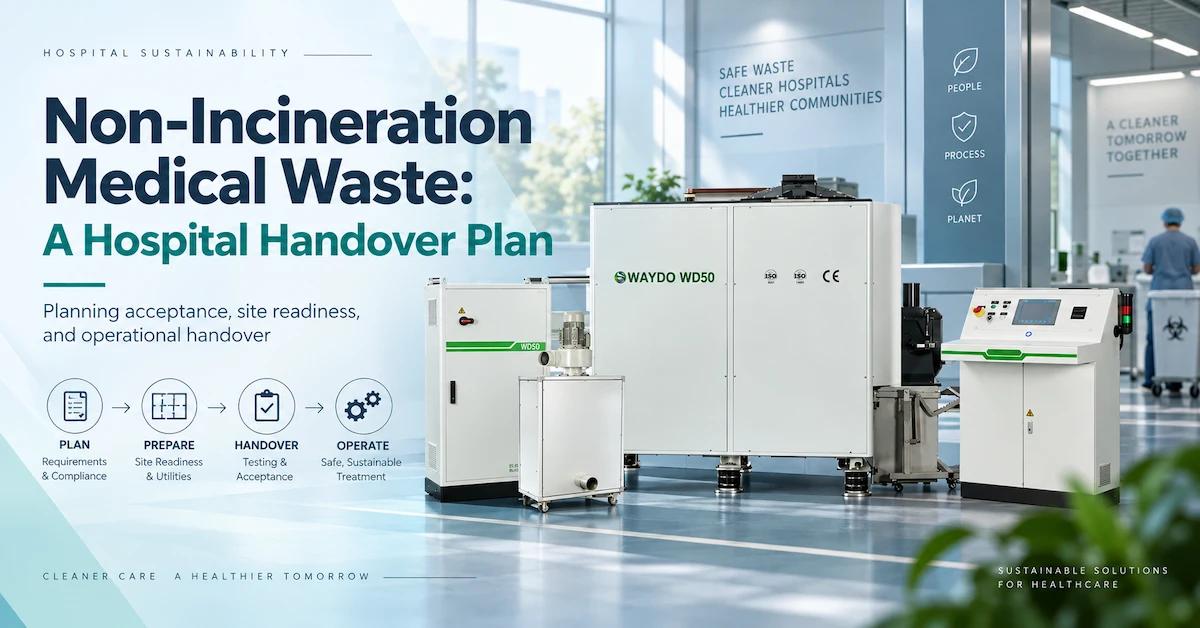
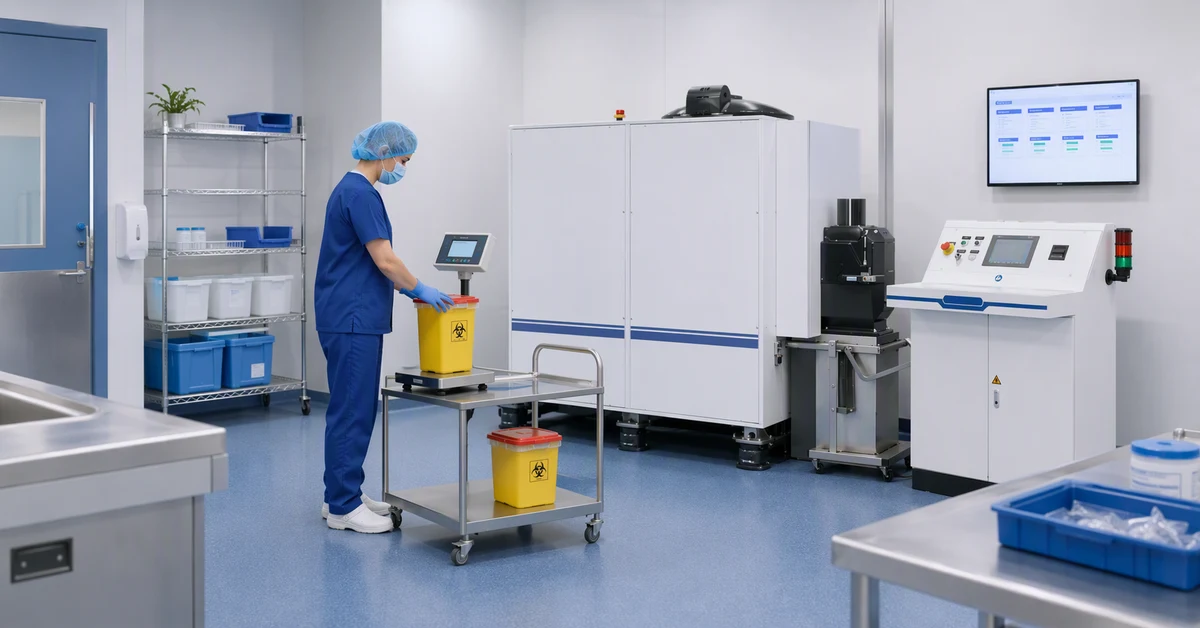
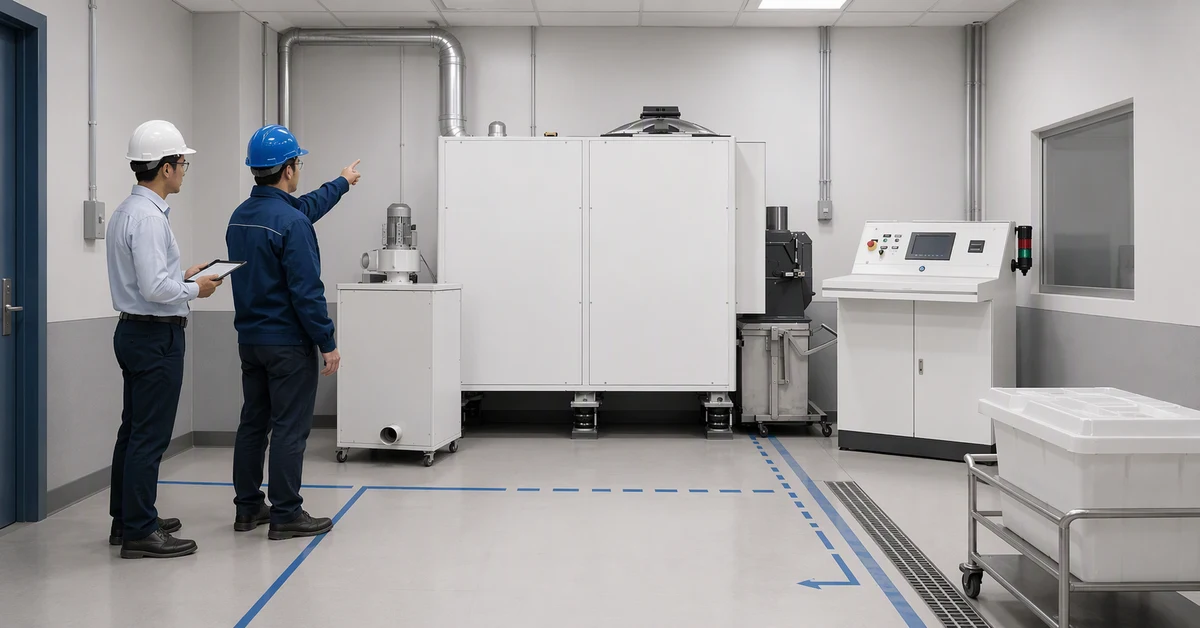
The article's images show generated concept scenes derived from the WAYDO equipment reference. They help a buyer visualize a clinic workflow, but they are not factory photographs, customer cases or validation records. A high-quality RFQ should attach real factory documents, actual installation drawings and confirmed test evidence when those materials are available.
How to Choose a WAYDO Capacity for a Small Clinic Group
Use the seven-day accepted-waste baseline to calculate the design day. Add the peak compatible weight, container volume and available treatment hours. Reserve time for start-up checks, loading, discharge, cleaning, record review and minor interruptions. Compare the required effective output with the manufacturer's published capacity only after confirming what the capacity figure means and which load it assumes.
The public product data lists WAYDO WD05 at 150 litres and 18 kg/hour, WD15 at 170 litres and 40 kg/hour, WD50 at 450 litres and 115 kg/hour, and WD330 at 670 litres and 280 kg/hour. These are published model figures for initial discussion, not a recommendation for a clinic without its waste profile. Final model selection requires confirmation of input composition, batch limits, cycle schedule, utilities, site access and evidence.
| Model | Published vessel volume | Published capacity | Clinic planning question |
|---|---|---|---|
| WAYDO WD05 | 150 litres | 18 kg/hour | Can the normal load fit the staffed window? |
| WAYDO WD15 | 170 litres | 40 kg/hour | What feed mixture supports the stated rate? |
| WAYDO WD50 | 450 litres | 115 kg/hour | Can a group hub sustain loading and discharge? |
| WAYDO WD330 | 670 litres | 280 kg/hour | Is a regional clinic network the real buyer? |
As a hypothetical example, suppose a five-site clinic group produces 84 kilograms of compatible waste on its design day and has six staffed treatment hours. If one hour is reserved for checks, cleaning and handover, the effective requirement is 16.8 kilograms per available hour. That arithmetic does not prove that WD05 is suitable. The mixture, batch limits, cycle duration, loading method and resilience plan still need a supplier review.
A single branch with a smaller load may want to investigate infectious waste treatment for small clinics as a project question, not as an assumed recommendation. The supplier should confirm whether the actual materials, container sizes, daily rhythm and local authorization fit the proposed model.
Do not oversize for a single exceptional day without explaining how the equipment will operate on normal days. Ask about partial loads, start-up, minimum operating conditions and the consequence of a failed batch. Also confirm the room footprint, movement path, floor loading, door width, lifting method and service clearance. A model that fits the mass calculation may not fit the building.
Get a Clinic Capacity and Site Review
Build a Clinic Medical Waste Management System Around People
A treatment unit cannot correct an unclear management system. Assign one person to own the waste map, one person to approve segregation training, one person to maintain the equipment record and one person to authorize the release route. For a clinic group, define which responsibilities stay at each branch and which are centralized.
Write a simple controlled procedure: container selection, labeling, internal movement, temporary storage, acceptance check, loading, cycle start, alarm response, cleaning, discharge, record retention, residue transfer and incident escalation. The procedure should state what happens when a container is incorrectly sorted, when a cycle is interrupted, when a sensor alarm appears or when a contractor refuses the output.
For a clinic medical waste management system, include a training matrix and a maintenance calendar. Record the operator, equipment identity, date, load description, weight, cycle result, release decision and abnormal events. These records support internal learning and supplier discussions; they do not by themselves establish regulatory compliance.
A good system also includes the people who do not operate the machine. Nurses, clinicians, cleaners, porters, contractors and facilities staff all affect the input. Use short stream-specific training with photos of the clinic's own containers. Review incidents without asking staff to handle dangerous material outside the approved procedure.
Estimate Medical Waste Treatment System Cost for Clinics
The purchase price is only one line in the business case. A realistic model separates capital equipment, room preparation, delivery, installation, commissioning, training, validation, utilities, consumables, spare parts, operator time, cleaning, residue handling, permits and service support. Compare each line with the cost of licensed collection and the value of the storage and transport risk that the chosen route changes.
For an initial spreadsheet, calculate cost per released kilogram. Use measured electricity and water where relevant, labor attributable to the process, maintenance allowance, consumables, residue transfer and the cost of failed or repeated cycles. Keep financing and depreciation separate from direct operating cost so that a supplier's low energy statement is not confused with total ownership value.
When evaluating medical waste treatment system cost for clinics, request an itemized quotation. Ask whether the price includes loading equipment, residue bins, electrical panels, ventilation connections, drainage, documentation, training, spare parts, remote support, installation supervision and acceptance testing. Ask for packing dimensions, shipping assumptions, warranty scope and response times. MOQ, material grades and delivery dates must be confirmed in the current quotation rather than copied from a general article.
Use a sensitivity check
Calculate at least three cases: normal load, peak load and low-load operation. Also test a delayed collection day, a one-day maintenance interruption and a rejected batch. The question is not whether one spreadsheet outcome looks attractive. The question is whether the route remains workable when the clinic operates as it actually does.
A simple hypothetical example can show why the denominator matters. If a batch has an assumed direct operating cost of 18 currency units and releases 30 kilograms, the direct cost is 0.60 units per kilogram. If only 20 kilograms are released because the rest is held for a decision, the figure becomes 0.90. These are arithmetic examples, not WEIDUN prices or measured clinic results.
Check Medical Waste Disposal Regulations for Clinics Before Ordering
Regulations differ by country, state, province and municipality. They may control waste classification, storage duration, transport, treatment authorization, emissions, worker protection, residue disposal, record keeping and the use of biological indicators or other verification methods. A supplier can provide technical documents, but the clinic and its competent local advisors must establish what is legally required at the destination.
Before the RFQ is finalized, ask the local waste authority or qualified compliance advisor whether on-site treatment is permitted for the proposed waste categories. Confirm whether the clinic needs a permit, registration, environmental approval, medical-waste plan, discharge approval, operator training record or periodic inspection. Ask what evidence must be retained for each batch and who is allowed to release the treated output.
For medical waste disposal regulations for clinics, treat the public page as a starting point for questions, not legal advice. The final decision must be based on the destination jurisdiction's current rules. A non-incineration process is not automatically exempt from authorization, and a change in physical form does not automatically authorize general disposal or recycling.
In the RFQ, include a compliance responsibility matrix. State which party supplies technical files, which party prepares the room, which party communicates with the authority, which party performs validation, which party handles rejected loads and which party accepts residue. This avoids the common gap where equipment is delivered but no one owns the final release pathway.
For a group that wants on-site medical waste treatment for clinics, ask for a site-by-site operating boundary. A shared model may require a different collection and custody plan from one unit installed inside each branch.
Compare Clinic Disposal Options on the Same Boundary
When comparing a contractor, an autoclave proposal and FHT equipment, use the same feed and the same output definition. Include collection, loading, shredding, treatment, cooling, discharge, residue transfer and documentation for every route. If one supplier excludes internal labor while another includes it, the comparison is not yet fair.
Autoclave treatment uses steam-based conditions and may require steam, condensate, pressure-related systems and a separate shredding step depending on the configuration. WEIDUN describes FHT as generating heat through mechanical work in an integrated chamber. The choice should be made from the accepted feed, site utilities, validation evidence, service capacity and legal requirements rather than from a technology label alone.
| Comparison item | Question for clinic procurement | Evidence to request |
|---|---|---|
| Feed compatibility | Which exact materials and containers are accepted? | Written compatibility matrix and exclusions |
| Treatment evidence | What test applies to the offered model and load? | Report, conditions, method, result and limits |
| Utilities | What must the clinic provide and measure? | Utility schedule and site drawing |
| Output route | Who accepts the treated residue? | Written receiving requirements and responsibility matrix |
| Service continuity | What happens during downtime or a failed batch? | Response time, spares plan and backup route |
What Should a Clinic RFQ Package Contain?
A supplier can give a better answer when the inquiry includes a clear buyer, site and waste profile. State the company and facility name, country, clinic type, number of sites, procurement stage, target commissioning date and contact for technical questions. Attach a room sketch or dimensions, door and route information, utility availability and any known local approval requirement.
Include the seven-day accepted-waste table, peak-day quantity, container types, moisture notes, exceptional streams, operating hours, required pickup or treatment frequency and expected future growth. State which assumptions are measured and which are provisional. Ask for a response that marks each item as confirmed, supplier assumption, buyer responsibility or requiring site verification.
Commercial questions should include MOQ, model-specific delivery schedule, packaging method, shipping dimensions, delivery term, installation scope, training, warranty, recommended spares, remote support and service response. The answer may vary by configuration and destination. It must be confirmed in writing for the project and should not be invented in the blog.
Technical questions should request the general arrangement drawing, floor loading, electrical schedule, cooling or water requirements, ventilation or exhaust needs, cleaning method, operator access, emergency stop behavior, alarm response, batch record method, validation package and residue interface. This makes the resulting quotation useful to purchasing, facilities, infection prevention and compliance teams at the same time.
Frequently Asked Questions From Clinic Buyers
Does every clinic need on-site treatment?
No. A small clinic with low, irregular or specialist waste may be better served by licensed collection. On-site treatment is worth studying when compatible waste is predictable, storage or transport is a problem, a suitable room and operator are available, and the local route permits treatment. The decision should use measured data and a complete cost boundary.
Can ordinary clinic waste be put into an infectious-waste treatment machine?
Do not use the machine as an ordinary-waste disposal bin. Ordinary waste should remain segregated, and the proposed input should match the manufacturer's written compatibility and loading instructions. Mixed waste can change density, moisture, treatment behavior and residue acceptance.
Can sharps be treated with soft infectious waste?
Only if the selected configuration, container and validated procedure explicitly allow it. Sharps create puncture, loading and maintenance risks. A clinic should not improvise a sharps policy from a general statement that the machine shreds waste. Ask for a written acceptance boundary and safe handling procedure.
How many kilograms per day does a clinic machine need?
There is no universal clinic number. Measure compatible waste, peak timing, volume, available staffed hours and the actual cycle schedule. A nominal hourly capacity does not equal released output after loading, cooling, cleaning, record review and downtime.
What is the medical waste treatment system cost for clinics?
A current quotation is required. Cost depends on model, configuration, site preparation, utilities, shipping, installation, validation, service, staffing and residue handling. Compare lifecycle cost per released kilogram with the full licensed collection cost. Do not use a generic online price as a project budget.
Can a supplier confirm medical waste disposal regulations for clinics?
A supplier can identify technical information needed for the equipment and may support a project discussion, but the clinic must confirm current local requirements with the competent authority or qualified advisor. The applicable rules depend on the destination and waste category.
What evidence should a clinic request before an order?
Request the offered model's specifications, compatibility matrix, process description, relevant test reports, operating instructions, site requirements, maintenance plan, training scope, warranty and acceptance procedure. Ask the supplier to identify which evidence is manufacturer data, which is independent, and which must be generated during project commissioning.
Are the images in this article real clinic installations?
No. The article images are concept illustrations generated from a WAYDO equipment reference to show possible clinic workflows. They are not customer case photos, factory evidence, certification evidence or validation results. A buyer should request actual project documents before relying on a performance or installation claim.
Conclusion
The next step is a measured waste review and a site-specific proposal. Send WEIDUN the country, clinic type, accepted waste categories, seven-day and peak quantities, container information, available treatment hours, room constraints and desired installation route. Ask for an itemized model recommendation that states its assumptions, exclusions, utility requirements, validation scope and commercial terms.
For a focused inquiry about medical waste treatment for clinics, include the phrase “clinic RFQ” in the subject and attach the load table. Ask whether a WD05, WD15, larger group model or another arrangement is appropriate only after the supplier reviews the actual stream. This creates a qualified conversation instead of a generic brochure request.