
Why Hospitals Are Rethinking Traditional Medical Waste Treatment Methods
Medical waste management is one of the most important challenges for healthcare facilities.
Hospitals generate different types of hazardous waste every day, including:
- Infectious waste
- Used medical supplies
- Contaminated disposable products
- Laboratory waste
- Sharps waste
For decades, incineration has been considered one of the most common solutions for medical waste disposal.
However, increasing environmental requirements, higher operating costs, and the global movement toward sustainable healthcare have encouraged hospitals and governments to explore non-incineration medical waste treatment technologies.
The question many healthcare decision-makers are asking is:
Incineration vs non-incineration medical waste treatment: which solution is better for modern hospitals?
The answer depends on several factors, including:
- Environmental impact
- Operating cost
- Installation requirements
- Safety
- Long-term sustainability
What Is Medical Waste Incineration?
Medical waste incineration is a treatment process that uses high-temperature combustion to destroy hazardous waste.
During incineration:
- Medical waste enters a combustion chamber
- High temperatures break down organic materials
- Waste volume is reduced
- Remaining ash requires further disposal
What Is Non-Incineration Medical Waste Treatment?
Non-incineration medical waste treatment refers to technologies that treat infectious waste without combustion.
Common methods include:
- Autoclave sterilization
- Microwave treatment
- Chemical disinfection
- Mechanical heat sterilization
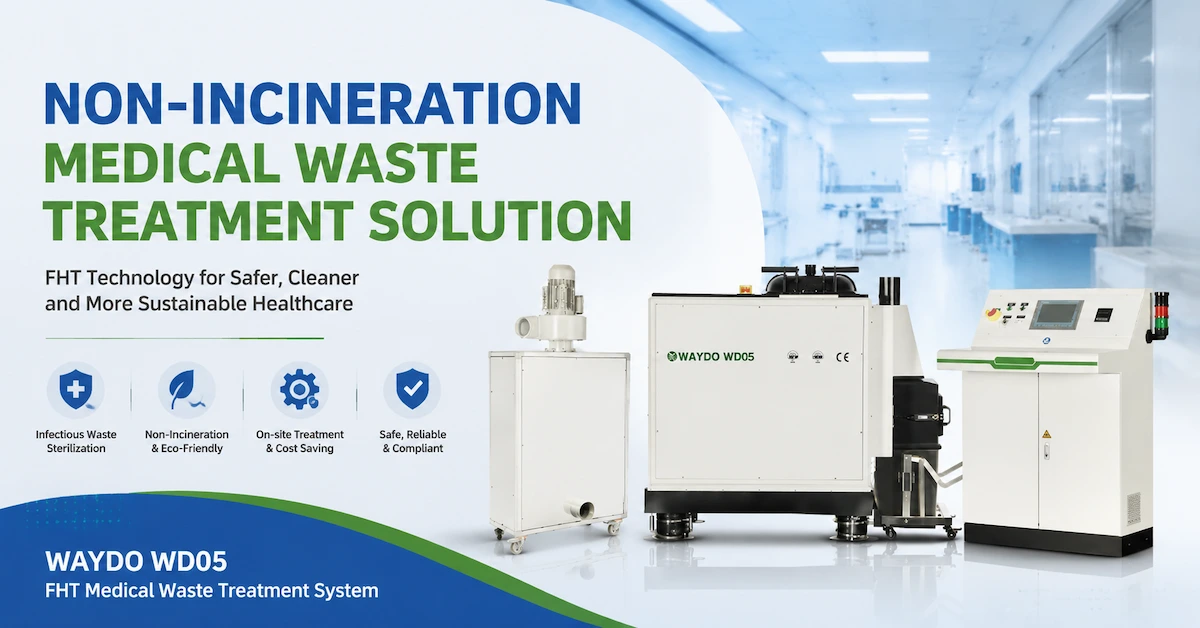
- Frictional Heat Treatment (FHT)
Among these technologies, FHT provides an innovative approach by combining:
- Mechanical shredding
- Friction-generated heat
- Sterilization process
Instead of burning waste, FHT systems use mechanical energy conversion to create the heat required for treatment.
Incineration vs Non-Incineration Medical Waste Treatment: Key Comparison
| Comparison Factor | Incineration | FHT Non-Incineration Treatment |
|---|---|---|
| Treatment principle | High-temperature combustion | Mechanical shredding + friction heat sterilization |
| Pollution impact | Higher emission control requirements | Lower environmental impact |
| Energy consumption | High fuel demand | Lower energy requirements |
| On-site treatment | Usually centralized | Suitable for source treatment |
| Installation complexity | Requires combustion facilities | More compact installation |
| Chemical usage | No chemicals but requires emission control | No chemical additives |
| Sustainability | Limited by emission concerns | Better aligned with green healthcare |
1. Environmental Impact: Pollution vs Sustainable Treatment
Environmental impact is one of the biggest differences between incineration and non-incineration solutions.
Challenges of Medical Waste Incineration
Although modern incinerators include emission control systems, combustion creates concerns related to:
- Greenhouse gas emissions
- Air pollution control
- Flue gas treatment
- Ash management
Hospitals using incineration must maintain strict environmental compliance.
Environmental Advantages of FHT Technology
FHT technology avoids the combustion process.
Benefits include:
- No burning process
- Reduced emissions concerns
- Lower environmental footprint
- Support for sustainable healthcare goals
For hospitals seeking green transformation, non-incineration medical waste treatment provides a more environmentally responsible direction.
2. Energy Consumption Comparison
Energy efficiency directly affects long-term operating costs.
Incineration Energy Requirements
Incineration requires:
- Fuel combustion
- High-temperature maintenance
- Exhaust treatment systems
This creates continuous energy demand.
FHT Energy Advantages
FHT generates heat through mechanical friction.
The process:
Mechanical energy
↓
Friction
↓
Thermal energy
↓
Sterilization
This reduces dependence on external heating sources.
3. Installation and Infrastructure Requirements
Different treatment technologies require different facility conditions.
Incineration Installation Requirements
Typically requires:
- Large installation area
- Combustion chamber
- Exhaust treatment system
- Emission monitoring equipment
This makes incineration more suitable for centralized treatment facilities.
FHT Installation Advantages
FHT systems are designed for:
- Hospitals
- Clinics
- Laboratories
- Healthcare facilities
Advantages:
- Compact footprint
- Easier integration
- Suitable for decentralized treatment
4. On-Site Medical Waste Treatment Capability
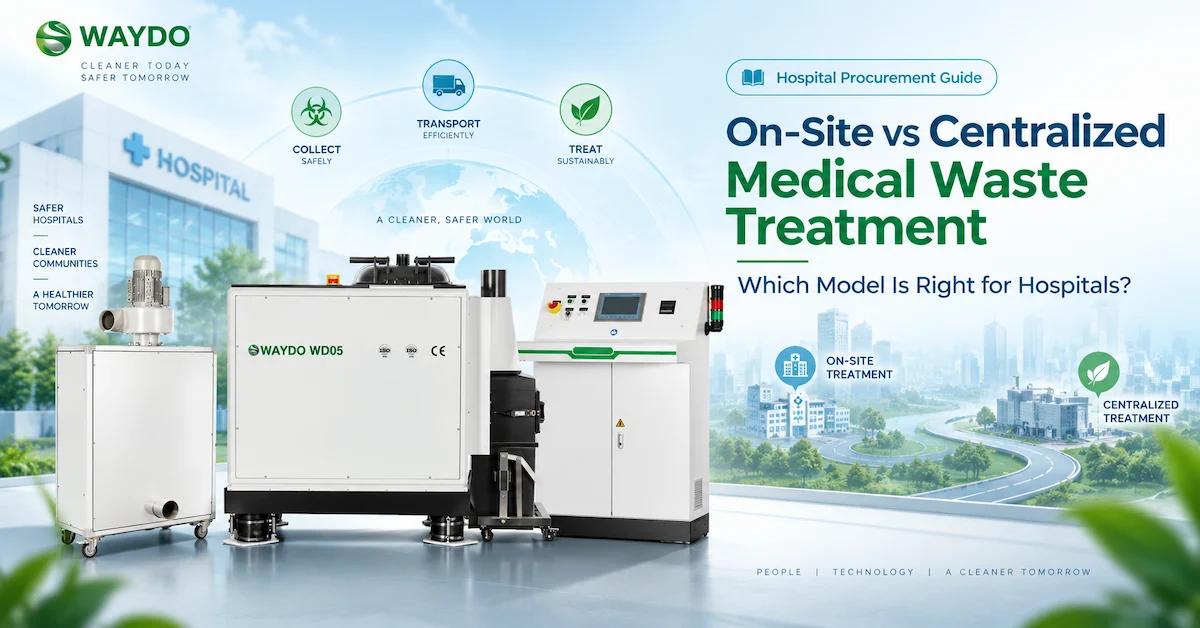
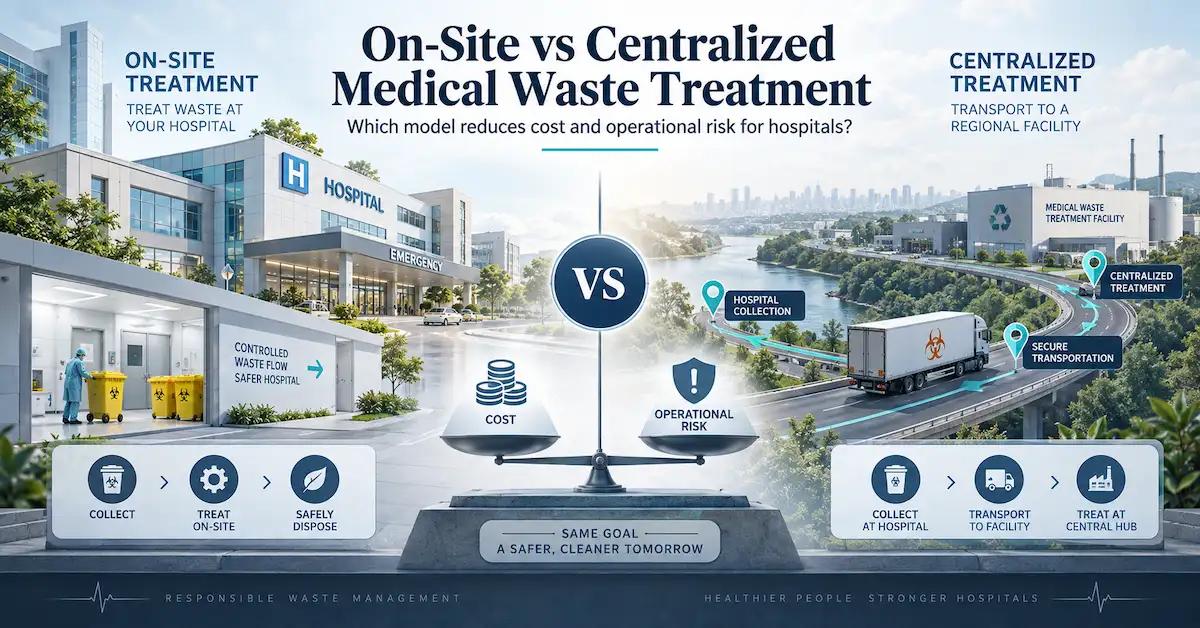
One major difference between the two approaches is where treatment occurs.
Traditional Incineration Model
Typical workflow:
Hospital
↓
Temporary storage
↓
Transportation
↓
Central treatment facility
↓
Final disposal
Challenges:
- Transportation risk
- Storage requirements
- Additional logistics costs
FHT On-Site Treatment Model
Workflow:
Hospital
↓
Waste collection
↓
FHT treatment
↓
Sterilized output
Benefits:
- Treat waste at source
- Reduce transportation dependence
- Improve infection control
5. Operating Cost and Long-Term Value
When choosing a medical waste treatment system, buyers should consider total lifecycle cost.
| Cost Factor | Incineration | FHT System |
|---|---|---|
| Initial investment | High | Depends on capacity |
| Fuel cost | Higher | Lower |
| Maintenance complexity | Higher | Moderate |
| Transportation cost | Often required | Reduced |
| Long-term sustainability | Limited | Stronger |
The lowest purchase price is not always the most economical choice.
Healthcare facilities should evaluate:
- Equipment lifespan
- Operating expenses
- Maintenance requirements
- Waste transportation costs
6. Which Medical Waste Treatment Method Is Better for Hospitals?
There is no universal answer because every facility has different requirements.
However, hospitals increasingly prefer non-incineration solutions when they need:
- Safer waste handling
- Lower environmental impact
- On-site treatment capability
- Reduced operational complexity
FHT technology is particularly suitable for:
- Medium and large hospitals
- Healthcare groups
- Remote medical facilities
- Sustainable hospital projects
Applications of Non-Incineration Medical Waste Treatment Systems
Hospitals and Healthcare Centers
Applications:
- Operating rooms
- Emergency departments
- ICU areas
- Medical waste rooms
Benefits:
- Improve infection control
- Reduce waste storage time
- Optimize waste workflow
Laboratories
Suitable for:
- Biological waste
- Testing materials
- Research waste
Government Healthcare Projects
Government projects increasingly focus on:
- Environmental protection
- Sustainable infrastructure
- Decentralized waste management
How to Choose Between Incineration and Non-Incineration Treatment?
Before selecting a system, buyers should evaluate:
1. Waste Generation Volume
Consider:
- Daily waste output
- Peak waste periods
- Future expansion
2. Local Regulations
Different countries have different requirements for:
- Medical waste disposal
- Emission standards
- Environmental compliance
3. Facility Location
Remote hospitals may benefit more from on-site treatment solutions.
4. Sustainability Goals
Organizations focused on green healthcare should consider non-incineration alternatives.
Why FHT Technology Is Becoming a Future Medical Waste Solution
FHT represents a new generation of medical waste treatment technology.
Its core advantages include:
- Non-incineration operation
- Mechanical heat sterilization
- Reduced transportation needs
- Improved source control
- Sustainable waste management
For healthcare organizations looking to modernize their waste management systems, FHT provides a practical alternative to traditional disposal methods.
FAQ About Incineration vs Non-Incineration Medical Waste Treatment
1. Is incineration still used for medical waste treatment?
Yes. Incineration remains widely used, especially for specific hazardous waste applications.
2. What is the main difference between incineration and non-incineration treatment?
Incineration destroys waste through combustion, while non-incineration technologies sterilize waste without burning.
3. Is non-incineration medical waste treatment environmentally friendly?
Generally, non-incineration systems have lower environmental impact because they avoid combustion emissions.
4. What is FHT medical waste treatment technology?
FHT uses mechanical friction to generate heat for sterilizing infectious medical waste.
5. Is FHT suitable for hospitals?
Yes. FHT systems are designed for hospitals, clinics, laboratories, and healthcare facilities.
6. Which method has lower operating costs?
Costs depend on capacity and location, but non-incineration systems can reduce transportation and fuel-related expenses.
7. Does FHT require chemicals?
No. FHT relies on mechanical energy and friction-generated heat.
8. Can non-incineration systems replace incinerators?
For many infectious medical waste applications, non-incineration technologies provide an effective alternative.
9. What should hospitals consider before purchasing a system?
Hospitals should evaluate waste volume, regulations, installation requirements, operating costs, and supplier support.
10. How can I get a medical waste treatment solution recommendation?
Contact Weidun Environmental for a customized solution based on your facility requirements.
Conclusion
The comparison of incineration vs non-incineration medical waste treatment shows a clear industry trend toward safer, cleaner, and more sustainable healthcare waste management.
While incineration remains suitable for some applications, non-incineration technologies such as FHT provide hospitals and healthcare organizations with new possibilities:
- Treat waste at the source
- Reduce environmental impact
- Improve operational efficiency
- Support sustainable healthcare development
Weidun Environmental provides advanced FHT medical waste treatment systems designed for hospitals, laboratories, and healthcare projects worldwide.
Contact our team to explore a customized medical waste treatment solution.